WW/OCEANFREIG
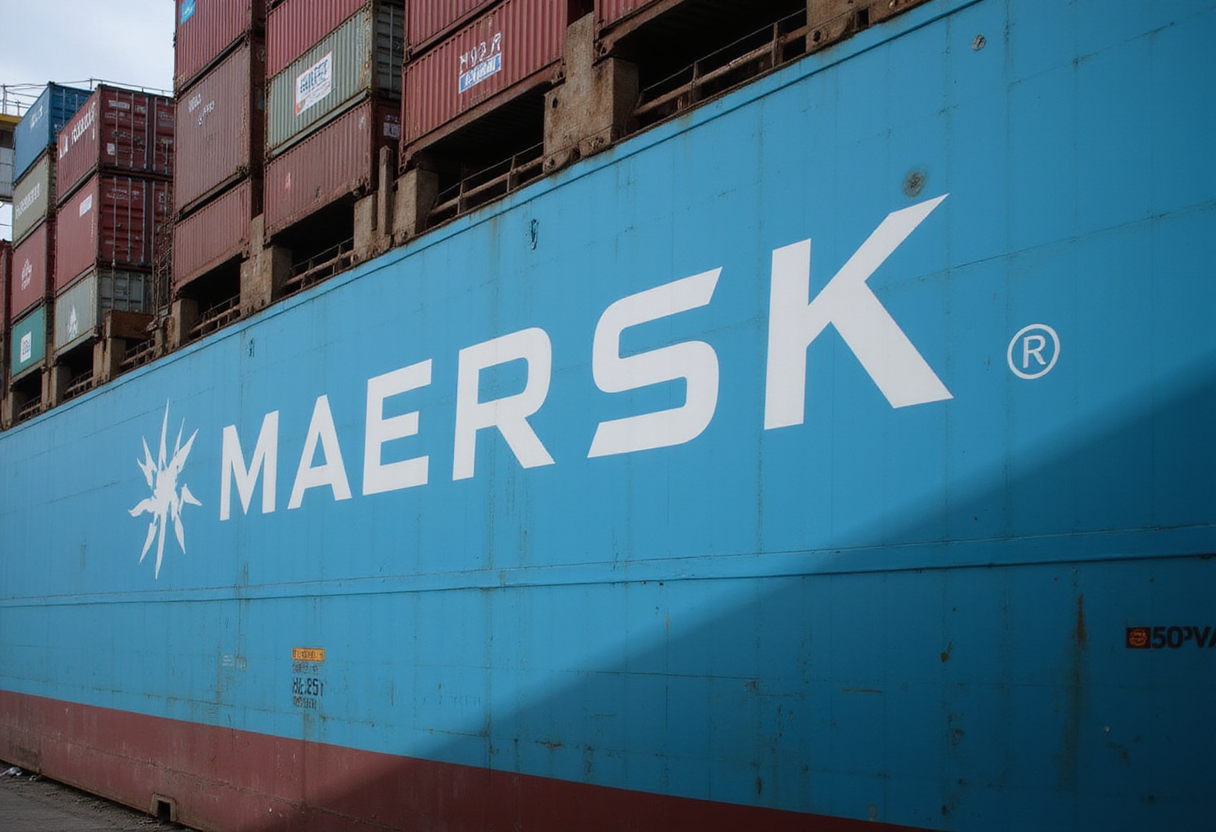
Maersk triples S5S contingency surcharge to $1,500 per box
Maersk lifts the S5S Emergency Contingency Surcharge from $500 to $1,500 per container from 1 November 2026, citing Red Sea disruption and rising network costs.
- Desk
- Ocean Freight
- By
- Elena Vasquez
- Filed
- Length
- 575 words
- Read
- 3 min
Key points04
- Maersk raises the S5S ECS from US$500 to US$1,500 per container, effective from a Price Calculation Date of 1 November 2026.
- The increase applies to 20-foot and 40-foot dry equipment from India, Bangladesh and Sri Lanka to South Africa and the Indian Ocean Islands.
- The revised surcharge also covers reefer, special equipment, out-of-gauge, non-operating reefer and shipper-owned containers unless otherwise specified.
- Maersk attributed the increase to the Red Sea and Gulf of Aden situation, deteriorating operational conditions, market developments and network costs.
Maersk will triple its Emergency Contingency Surcharge (ECS) on the S5S service linking the Indian Subcontinent with South Africa and the Indian Ocean Islands, raising the charge from US$500 to US$1,500 per container for both 20-foot and 40-foot dry equipment.
The revised surcharge applies from a Price Calculation Date of 1 November 2026. The increase covers shipments from India, Bangladesh and Sri Lanka to South Africa and the Indian Ocean Islands, and it remains subject to applicable regulatory approvals and notice periods.
| Equipment type | Current ECS | New ECS |
|---|---|---|
| All 20-foot dry | US$500 | US$1,500 |
| All 40-foot dry | US$500 | US$1,500 |
All amounts apply per container.
Why is Maersk raising the charge?
Maersk said the Red Sea and Gulf of Aden situation continues to affect global supply chains. The carrier attributed the increase to:
- deteriorating operational conditions,
- market developments, and
- network costs.
The carrier did not break down how much of the $1,000-per-box increase stems from rerouting, transit time extensions or port-level disruption. For shippers, however, the arithmetic is blunt: a threefold jump on a contingency line item that now adds $1,500 to every dry box moved on the trade.
What does this mean for shippers and forwarders?
The S5S trade connects three origin markets — India, Bangladesh and Sri Lanka — with South Africa and the Indian Ocean Islands, corridors that serve regional retail, textile and industrial supply chains. Exporters booking on or after the 1 November Price Calculation Date will see the higher ECS reflected in their landed costs immediately, because the surcharge applies per container rather than per shipment or per tonne.
The charge structure matters for equipment planning. The revised surcharge applies to:
- 20-foot and 40-foot dry containers,
- reefer cargo,
- special equipment,
- out-of-gauge shipments,
- non-operating reefers, and
- shipper-owned containers,
unless otherwise specified. That breadth means few cargo types on the trade escape the increase, including shippers who supply their own boxes in an attempt to bypass carrier equipment charges.
For forwarders and BCOs, the key contractual detail is the Price Calculation Date trigger. Bookings with a Price Calculation Date before 1 November hold the existing $500 level; bookings calculated on or after that date carry the full $1,500. Shippers with flexibility on booking timing or cargo readiness have a narrow window to lock in the lower charge before the step-up takes effect.
The escalation also sharpens the negotiation picture. A $1,000-per-container increase on a regional trade lane is material for low-margin commodity flows, and cargo owners with volume commitments will likely press Maersk — and its competitors on the route — for surcharge treatment within contract terms rather than accepting the ECS as a pass-through.
Is this the peak of the surcharge cycle?
Maersk's framing points to a continuation rather than a resolution of the disruption. The carrier explicitly tied the increase to the Red Sea and Gulf of Aden situation, language that keeps the door open to further adjustments if operational conditions deteriorate again — or a rollback if the security picture improves.
For now, the notice period and regulatory approval caveat means the effective date carries some residual uncertainty, but shippers on the Indian Subcontinent–Southern Africa corridor should treat $1,500 per box as the working planning assumption from November onwards, with the trajectory of Red Sea-driven network costs the variable to watch.
Source: Container News
More from Elena Vasquez
Show full bio
News editor covering industry trends and analytics at Waybill Wire.
286 articles
Related05
Maersk cuts ECS by $500 on India Subcontinent–WCSA trade
Maersk trims India-Europe contingency surcharges from October
Maersk adds $300/FEU peak surcharge on Europe-to-Durban trades
Maersk slaps 24% fuel surcharge on Canadian container drayage
Maersk slaps $500 per box PSS on South America–Europe trades