WW/AIRCARGO
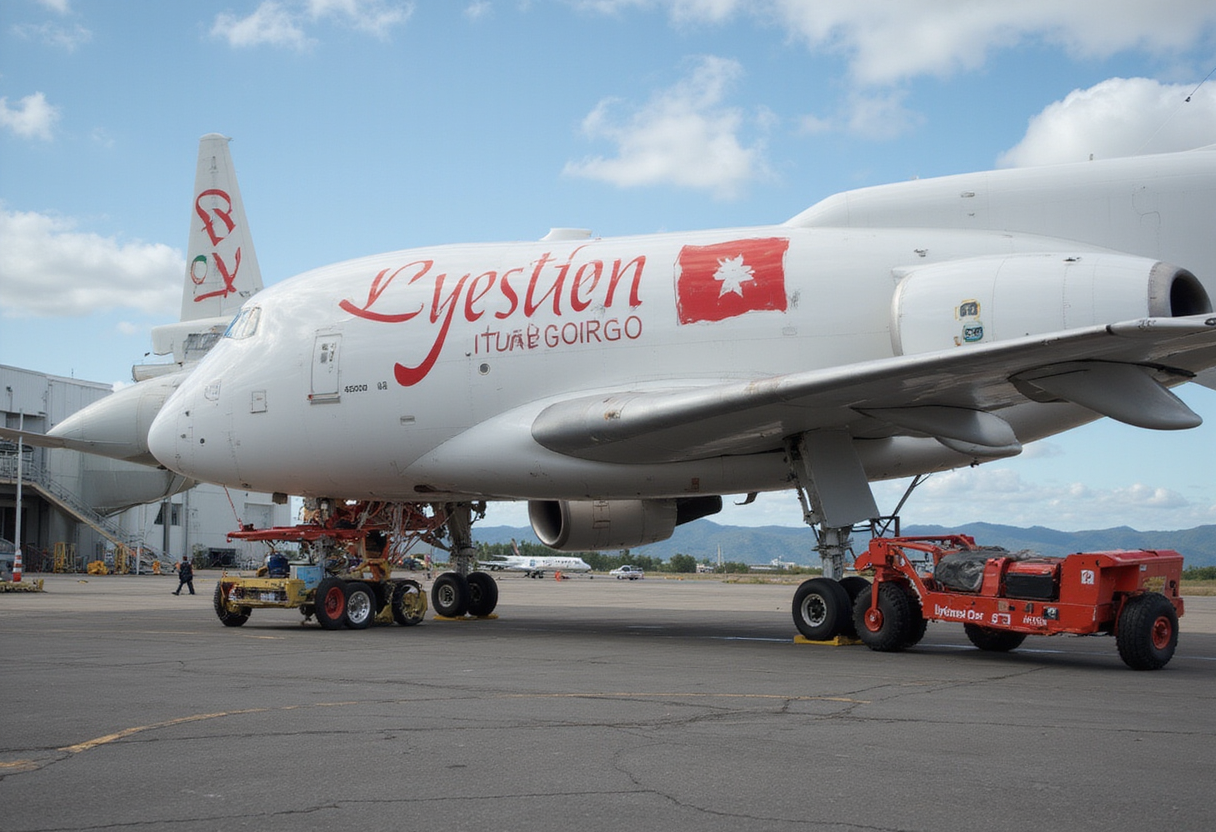
Lynden Air Cargo Flying Relief Missions to Guam and Sudan
Lynden Air Cargo has committed freighter aircraft to relief missions serving Guam and Sudan, pulling rough-field cargo capacity into two humanitarian corridors at once.
- Desk
- Air Cargo
- By
- Tom Whitfield
- Filed
- Length
- 458 words
- Read
- 2 min
Key points04
- Lynden Air Cargo is flying relief missions to Guam and Sudan.
- The operator is based in Anchorage, Alaska, and flies all-cargo freighters.
- The two missions run simultaneously, serving storm recovery and a conflict zone.
- Lynden has not disclosed tonnage, aircraft assignments or mission durations.
Lynden Air Cargo has diverted freighter capacity into relief operations on two fronts: Guam and Sudan. The Anchorage-based operator confirmed the missions in an announcement, committing its all-cargo fleet to humanitarian corridors half a world apart.
That's an unusual pairing. One mission serves a Pacific island territory recovering from a destructive storm season; the other feeds a conflict zone in North Africa where surface supply lines have collapsed. Different geographies, same problem — cargo that has to move by air because nothing else works.
What is Lynden bringing to these missions?
Lynden Air Cargo specializes in heavy outsized freight and rough-field operations. That profile matters here. Relief consignments into disaster zones rarely arrive at airports with intact infrastructure, and an operator accustomed to unpaved strips and self-sufficient ground handling can reach destinations mainstream carriers won't touch.
Guam adds a trans-Pacific leg into a market with limited scheduled all-cargo service. Sudan adds the harder problem: airspace risk, overflight permissions and a receiving network that humanitarian agencies have to assemble flight by flight.
For the NGOs and relief agencies coordinating these flows, an operator that commits aircraft rather than brokering space on scheduled services changes the planning math. You can schedule a full freighter payload. You can't reliably book 20 tonnes of relief goods onto a passenger belly at short notice.
What does this change for shippers?
Not much on the commercial side — this is humanitarian lift, not spot-market competition. But there are second-order effects worth watching.
Air cargo capacity is finite. Every freighter committed to relief work is a freighter not flying commercial cargo elsewhere. When a carrier of Lynden's profile pulls aircraft into Guam and Sudan missions, forwarders who occasionally charter that kind of heavy-lift capacity feel it in availability and, eventually, in price.
It also signals where demand shocks are landing. Storm recovery in the Pacific and conflict-driven food and medical flows into Sudan are both generating sustained airlift requirements, the kind that run for weeks or months rather than days.
The bigger picture
Relief flying has been a steady if unglamorous segment of the air cargo market, and operators with rough-field capability — Lynden among them — occupy a niche the big integrators don't contest. When two crises run simultaneously, that niche tightens.
Lynden has not disclosed mission durations, tonnage targets or the specific aircraft tails assigned to the two corridors. The company's announcement confirms the operations are underway, with flights supporting relief distribution in both Guam and Sudan.
Expect the missions to continue as long as the underlying needs do — storm recovery in Guam and the humanitarian emergency in Sudan both point to sustained airlift demand rather than one-off charters.
Source: Google News: air cargo
More from Tom Whitfield
Show full bio
Market editor covering companies, deals and strategy in Ocean and air freight, container shipping at Waybill Wire.
414 articles
Related05
Alaska Air targets 50% of Hawaii intra-island cargo market
US strikes on Iran push Red Sea container return out of reach, Xeneta warns
Northern Air Cargo settles leadership question with permanent CEO appointment
Are container lines now too big to fail?
Hawaii Carriers Add Cargo Capacity as Air Merger Network Hits 115 Destinations