WW/AIRCARGO
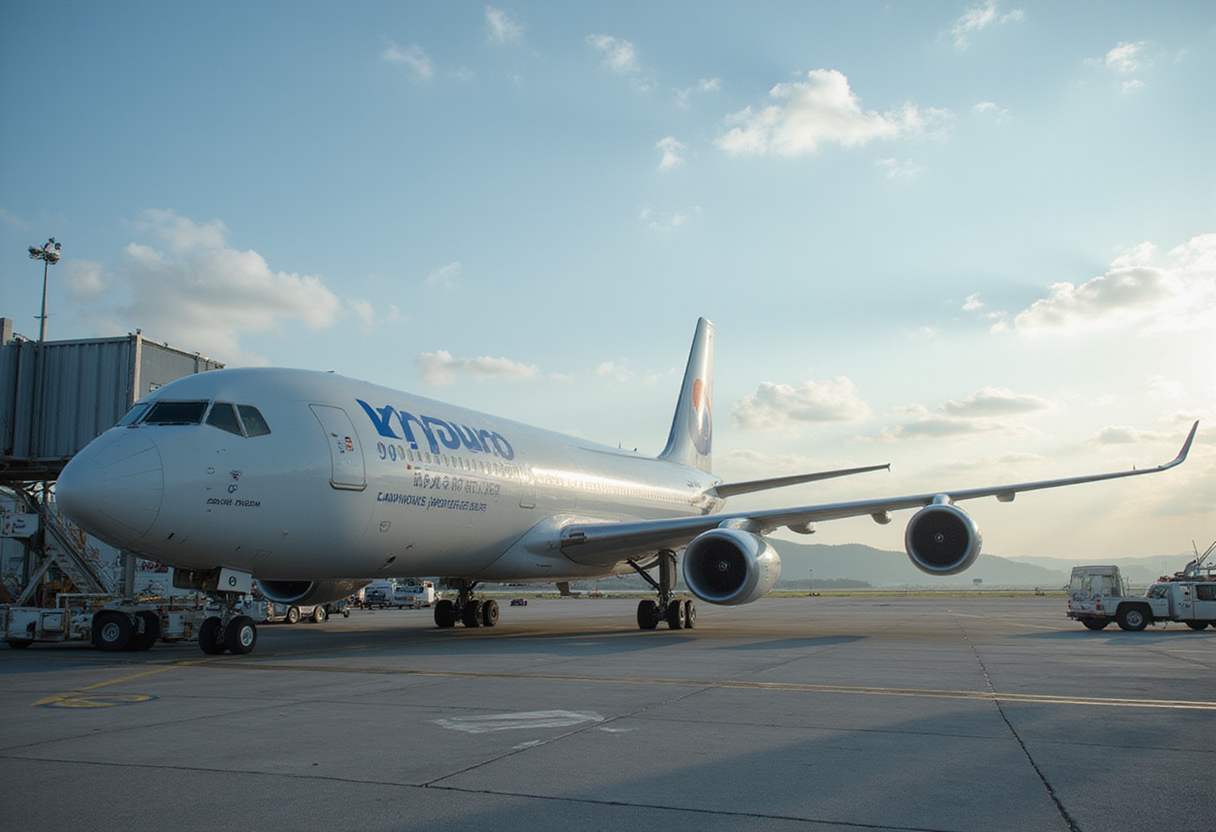
Korean Budget Carriers Pivot to Cargo as Chip Boom Lifts Air Freight Demand
Korea's low-cost carriers are turning belly capacity into a core cargo business as chip-led exports, fuel costs and thin passenger margins reshape their economics.
- Desk
- Air Cargo
- By
- Tom Whitfield
- Filed
- Length
- 620 words
- Read
- 3 min
Key points04
- Korean budget carriers are shifting strategic focus toward cargo, per a KED Global report
- The pivot responds to passenger yield pressure and elevated fuel costs
- Semiconductor boom is driving dense, high-value air freight demand on Korean export lanes
- Low-cost carriers are monetizing passenger aircraft belly capacity rather than operating dedicated freighters
Korea's low-cost carriers are reweighting their business toward cargo as the semiconductor boom reshapes the country's air freight flows, according to a report by KED Global.
The shift is defensive as much as opportunistic. Budget airlines across Korea face persistent pressure on passenger yields and elevated fuel costs, and freight — particularly electronics and semiconductor-linked traffic moving through Korean gateways — offers a revenue line that does not depend on filling leisure seats.
Why are budget airlines chasing cargo now?
For low-cost carriers, the cargo pivot answers two problems at once. Passenger operations remain margin-thin, with fuel a stubbornly large share of costs. Meanwhile, Korea's export engine — led by chips and electronics — generates dense, high-value air freight demand on outbound lanes.
Unlike full-service flag carriers, which run dedicated freighter fleets and cargo divisions, budget operators historically monetized only belly capacity on passenger aircraft. The KED Global report indicates they are now treating that belly space as a primary commercial asset rather than a byproduct, restructuring sales and capacity allocation around freight.
What does the chip boom have to do with it?
Semiconductors are the connective tissue of this story. Chip demand has strengthened Korean exports, and semiconductor products — small, light, high-value — are natural air freight. When chip cycles run hot, forwarders compete for capacity out of Korean airports, and rates firm up on outbound electronics lanes.
That dynamic gives airlines with available belly capacity leverage they have rarely enjoyed. A low-cost carrier flying a passenger route can sell the hold to freight forwarders moving chip-adjacent cargo, cushioning the airline against softness in ticket revenue and absorbing part of the fuel bill.
The risk is cyclicality. Chip-led freight booms reverse when semiconductor orders slow, and an airline that builds its cargo strategy on one vertical inherits that vertical's volatility. The carriers, per the report, appear to be treating cargo as a hedge rather than a wholesale replacement for passenger income.
Who gains and who loses?
The commercial consequences split along the freight value chain.
- Budget carriers: gain a second revenue stream and better asset utilization without adding aircraft, which matters when fuel prices squeeze passenger margins.
- Forwarders and shippers: get incremental capacity out of Korean gateways at a moment when electronics traffic is competing for belly space, potentially easing rate pressure on some lanes.
- Incumbent cargo operators: face new competition from carriers that previously left their holds undersold.
For shippers moving electronics out of Korea, more cargo-motivated budget capacity is broadly positive: it adds lift exactly where the chip boom is tightening the market.
Is this a durable strategy or a cycle trade?
The honest answer is that it depends on both fuel and chips. The two pressures pushing Korean low-cost carriers toward cargo — passenger economics and fuel costs — are structural features of the budget model. The magnet pulling them, semiconductor-driven freight demand, is cyclical.
Airlines that use the boom years to build cargo relationships, freighter experience and forwarder contracts can carry those assets through a chip downturn. Those that simply sell belly space into a hot market will find the advantage evaporates with the cycle.
The Korean pivot also reflects a broader post-pandemic lesson for low-cost carriers worldwide: passenger-only business models proved fragile when travel demand collapsed, while carriers with freight income kept cash flowing. Korea's budget operators are applying that lesson while the chip cycle gives them a window to do it profitably.
With semiconductor exports continuing to anchor Korean air freight demand, expect the country's budget carriers to keep expanding cargo's share of revenue — and to deepen that commitment as long as chip-driven load factors hold.
Source: Google News: air cargo
More from Tom Whitfield
Show full bio
Market editor covering consumer brands and retail at Waybill Wire.
323 articles
Related05
Samsung SDS buys Woojung Air to build in-house air freight muscle
Samsung SDS acquires Woojung Air to scale air freight capability
Samsung SDS Buys Woojung Air to Lift Logistics Margin Stuck Near 1%
Samsung SDS acquires Woojung Air to expand global air freight
Samsung SDS Buys Woojung Air to Build Out Air Freight Muscle