WW/PORTSTERMI
Koper forum links shore power, alternative fuels to Adriatic operations
Luka Koper hosted nine partners from eight European countries at the Port of Koper on 22 September under the BREEZE and SUPERALFUEL projects, advancing onshore power supply and alternative-fuel work for Adriatic shipping.
- By
- Amara Osei
- Filed
- Length
- 582 words
- Read
- 3 min
Key points05
- Forum held on 22 September at the Port of Koper under the EU-funded BREEZE and SUPERALFUEL projects.
- BREEZE brings together nine partners from eight European countries, led by the Hamburg Ministry of Economic Affairs.
- Hamburg has operated onshore power supply for ships since 2016, one of Europe's earliest deployments.
- SUPERALFUEL targets safety, feasibility and sustainable uptake of alternative fuels across the Adriatic-Ionian region.
- Luka Koper is advancing electrification of port equipment, expansion of solar capacity and broader emissions measures.
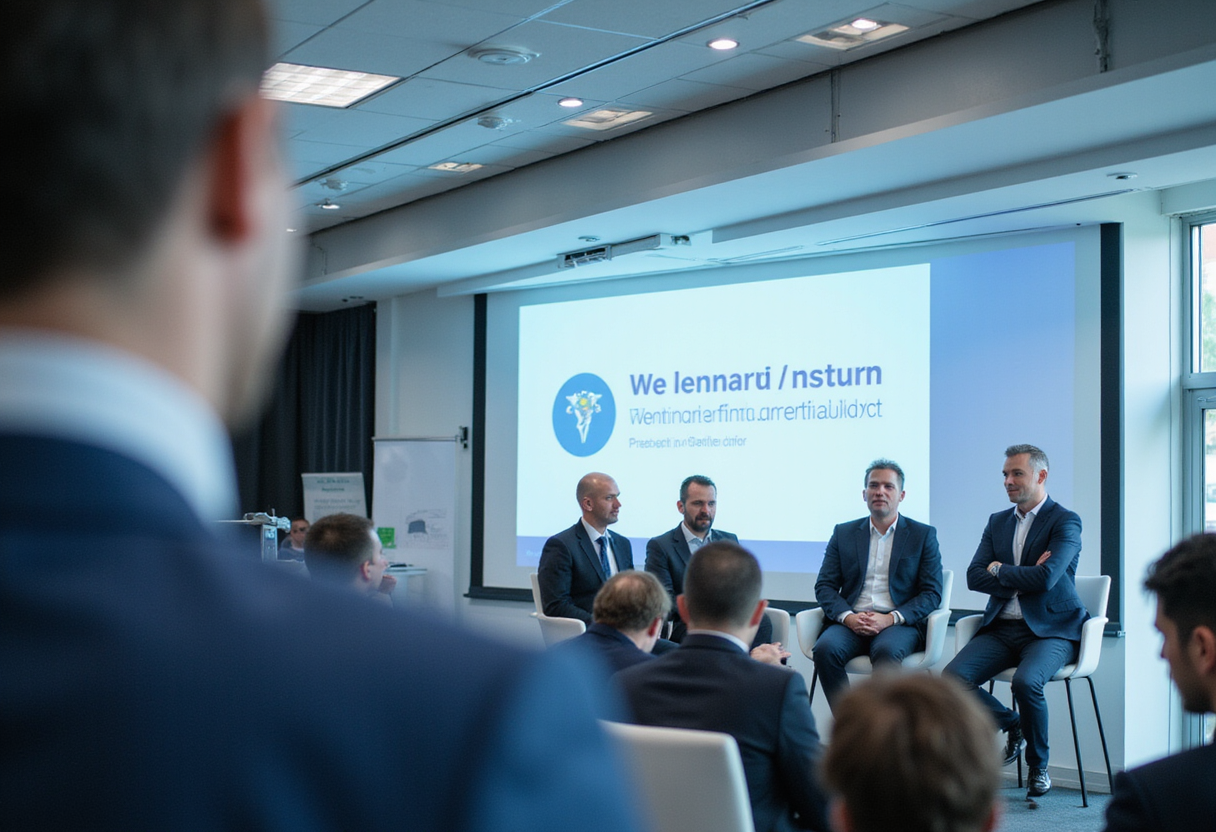
Luka Koper convened nine partners from eight European countries at the Port of Koper on 22 September for a joint forum under the EU-funded BREEZE and SUPERALFUEL projects, with the Slovenian terminal operator acting as a project partner in both initiatives.
The event reframed energy transition in maritime transport as a matter of immediate strategic decision-making rather than a distant planning exercise — a tone set by the host port's leadership from the opening session.
BREEZE, led by the Hamburg Ministry of Economic Affairs, focuses on knowledge exchange and good practices for the more effective deployment of onshore power supply (OPS) for ships, addressing technical, business and regulatory solutions across the consortium. SUPERALFUEL, the parallel strand, addresses alternative fuels in maritime transport, with a particular focus on safety, feasibility and sustainable use across the Adriatic-Ionian region.
What did Luka Koper's leadership push for?
Vojko Rotar, Member of the Management Board and Workers' Director at Luka Koper, opened proceedings by underlining the long-term, capital-intensive and largely irreversible nature of energy transition investments in port and maritime infrastructure. He described expert knowledge exchange as a critical compass for responsible strategic decisions and a means of reducing the risk of costly errors.
For terminal operators, the message translates into a hard procurement reality: every berth upgrade, every hybrid or electric yard-equipment order locks in a multi-year capex line that cannot easily be reversed if regulation shifts or throughput contracts.
What does Hamburg's experience tell smaller Adriatic ports?
Dr Sicco Rah from the Hamburg Ministry of Economic Affairs, representing the BREEZE lead partner, shared insights from Hamburg's experience of implementing onshore power supply from as early as 2016 — one of the earliest European deployments. He stressed that no single technical solution applies universally to all ports, given differences in spatial conditions, energy grids, management structures and business models.
That caveat is significant for any second-tier hub trying to template Hamburg's playbook. It implies that Adriatic operators must build their own business cases around local grid capacity, call profiles and revenue models — work that Luka Koper is already advancing on three fronts: electrification of port equipment, expansion of solar power generation capacity, and broader energy consumption and emissions reduction measures.
What does this mean for shippers and forwarders?
For container and ro-ro customers routing through the Adriatic, the practical takeaway is uneven progress. OPS coverage at Koper will advance in step with terminal renewal cycles, while the alternative-fuel question — safety, bunkering availability, pricing — will be shaped by the Adriatic-Ionian workstream under SUPERALFUEL.
Carriers running fixed-day Adriatic loops will need to track which berths deliver cold-ironing capability and which rely on auxiliary engines, since call durations, port dues and emissions accounting all flow from that distinction. Forwarders pricing Adriatic routings through 2027 should factor OPS availability into port-choice modelling rather than treating it as a uniform input.
Where does this lead?
The forum closed without fresh funding announcements, but it positioned Luka Koper as the convening point between North Sea OPS expertise and Adriatic alternative-fuel work. Both projects will feed into wider European maritime decarbonisation work over their remaining implementation cycles.
Shippers and carriers should expect OPS rollouts at Koper to track the terminal's own electrification and solar expansion, and should anticipate Adriatic-Ionian alternative-fuel pilots under SUPERALFUEL to surface as the next commercial signal of which clean bunker mixes carriers can reliably book across the region.
Source: Container News
More from Amara Osei
Show full bio
Staff writer covering marketplaces and e-commerce at Waybill Wire.
257 articles
Related05
Five Dutch seaports demand funded EU Ports Strategy action
Wind Is Back: 99 Ships Now Sail-Assisted as Maersk and MOL Join In
Ports of Genoa and FS Logistix launch green hydrogen pilot at Savona
BIMCO committees flag Hormuz security and fuel transition as top shipping risks
Gothenburg restarts rail freight for Fiskarheden forest exports