WW/OCEANFREIG
Hapag-Lloyd Confirms First SE1 Sailings via Suez Canal
Hapag-Lloyd confirms Umm Qarn will sail SE1 westbound from Tanjung Pelepas on 27 October and eastbound from Algeciras on 5 December, under naval protection.
- Desk
- Ocean Freight
- By
- Amara Osei
- Filed
- Length
- 568 words
- Read
- 3 min
Key points03
- Umm Qarn operates the first SE1 voyages via Suez: westbound 642W departing Tanjung Pelepas on 27 October 2026 and eastbound 649E departing Algeciras on 5 December 2026.
- Each voyage remains subject to a detailed security assessment, with transits under naval protection and coordination with authorities and security partners.
- Hapag-Lloyd describes the move as a gradual, service-specific approach — not a full strategic return of the Gemini network to the Red Sea.
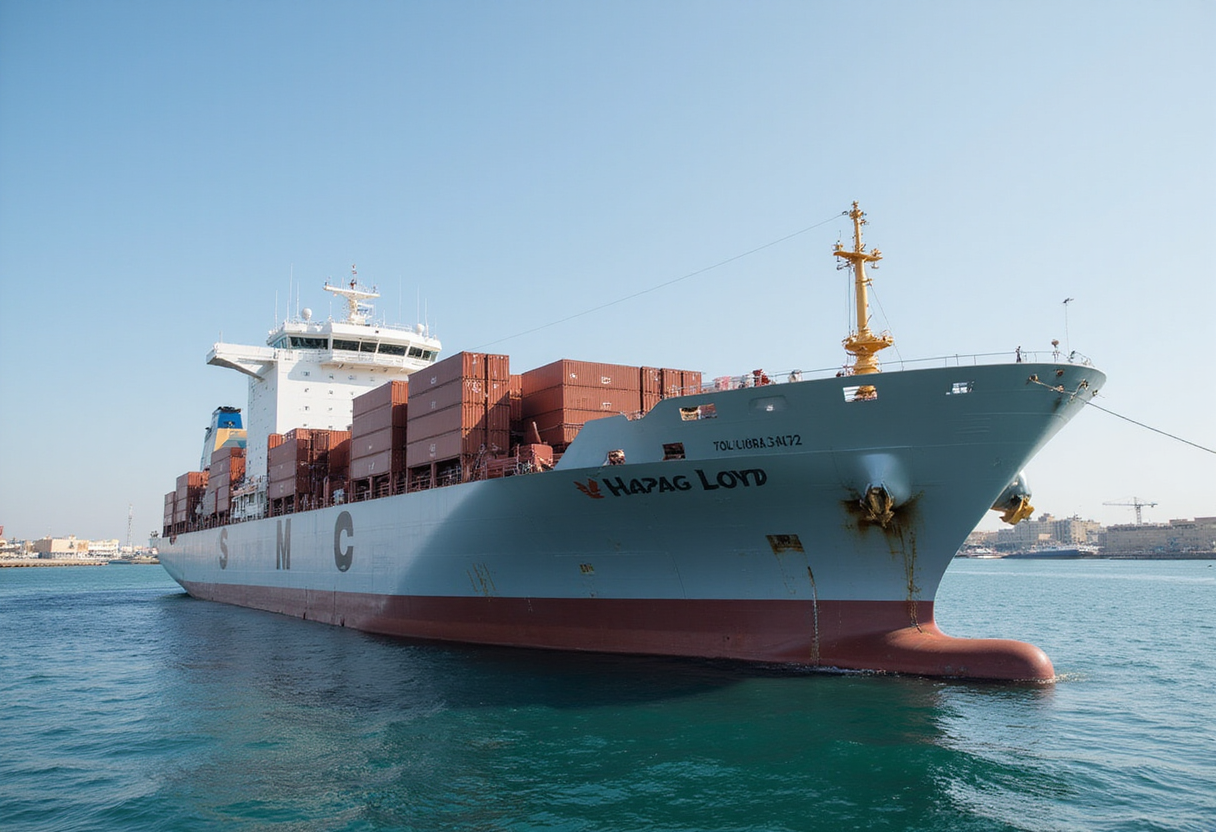
Hapag-Lloyd has confirmed the first westbound and eastbound sailings of the Gemini Cooperation's SE1 service through the Red Sea and Suez Canal, with the container ship Umm Qarn operating both voyages.
The westbound crossing, voyage 642W, departs Tanjung Pelepas — the vessel's last call before Suez — on 27 October 2026. The eastbound return leg, voyage 649E, leaves Algeciras on 5 December 2026, marking the first full round-trip rotation of a Gemini service via the canal since the network shifted tonnage away from the route.
A Gradual, Service-Specific Shift
The confirmed sailings follow the earlier decision by Hapag-Lloyd and Maersk to move selected Gemini services from the Cape of Good Hope routing back to the Red Sea and Suez Canal. The two carriers, which operate the Gemini Cooperation alliance, have framed the shift as incremental rather than wholesale.
Hapag-Lloyd stressed that the move represents a gradual, service-specific approach. It does not constitute a full strategic return of the Gemini network to the Red Sea.
For shippers on the Asia–Europe trade, the implications are tangible. The Cape routing added roughly 10 to 14 days of transit time per round trip and inflated bunker consumption across fleets. A service-by-service migration back through Suez, beginning with SE1, points toward gradually recovering schedule integrity and shorter lead times on affected loops — though only on the specific services Hapag-Lloyd and Maersk commit to the route.
Security Framework Remains Central
According to Hapag-Lloyd, its initial transits through the Bab el-Mandeb Strait proceeded as planned and provided operational experience ahead of the SE1 passages. Those early transits evidently gave the carrier enough confidence to schedule named voyages on a headline Gemini service.
Even so, the carrier is not treating the route as business as usual. Each voyage will remain subject to a detailed security assessment. Transits will take place under naval protection and in coordination with the relevant authorities and security partners.
That caveat matters for cargo interests. War-risk premiums and insurance conditions on Red Sea transits remain sensitive to incident levels, and a single security event could reverse the calculus for carriers weighing the shorter Suez routing against the longer but lower-risk Cape passage.
What It Means for the Market
The SE1 confirmation signals that the infrastructure and security arrangements for Red Sea transits are functioning at scale for at least one major alliance service. Forwarders booking on SE1-linked rotations will want to verify which legs the Umm Qarn voyages cover and how connecting Gemini hub feeds at Tanjung Pelepas and Algeciras adjust to the shorter routing.
For competitors still routing via the Cape, the move adds competitive pressure on transit-time-sensitive cargo, particularly ahead of the late-October westbound departure. Capacity absorbed by longer Cape routings has effectively tightened effective supply on Asia–Europe; any meaningful migration back to Suez would release that capacity back into the market, with downward implications for spot rates if the shift broadens.
Hapag-Lloyd's language, however, keeps expectations measured. The carrier has committed to named voyages on one service, under per-voyage security assessments and naval escort — not a network-wide strategic pivot. The pace of any wider Gemini return to the Red Sea will depend on how the Umm Qarn's October and December transits proceed and on the security picture around Bab el-Mandeb in the months ahead.
Source: Container News
More from Amara Osei
Show full bio
Staff writer covering marketplaces and e-commerce at Waybill Wire.
139 articles
Related05
Premier Alliance sends first Asia-Europe string back to Suez
Carriers Edge Back to Suez, but Industry Readers Say Normal Is Still Distant
Maersk's Suez Return Cuts India-Savannah Transit to 28 Days
Suez transits edge up, but container normality still far off
Suez Transits Resume, But Normality Remains Elusive for Carriers