WW/PROCUREMEN
GSI outsources hull blocks to 1894-founded bridge builder as slots fill to 2030
GSI has hired bridge builder China Railway Shanhaiguan to fabricate hull blocks as its near-RMB100bn orderbook fills slots to 2030, part of a wider Chinese outsourcing wave.
- By
- Marcus Bennett
- Filed
- Length
- 755 words
- Read
- 4 min
Key points05
- GSI's contracted business approaches RMB100bn ($14bn), with over 95% overseas orders and slots extending into 2030.
- Framework agreement with China Railway Shanhaiguan Bridge Group (founded 1894) covers outsourced hull block fabrication; value undisclosed.
- Jingjiang Heavy Industry targets up to 100,000 tonnes of annual ship block production, with ambitions in complete vessel construction.
- BRS Group counts at least seven dormant Chinese yards reactivated and a dozen established facilities expanding.
- HD Hyundai Heavy Industries outsourced the 168 m bow section of a 157,000 dwt suezmax to HSG Sungdong in April.
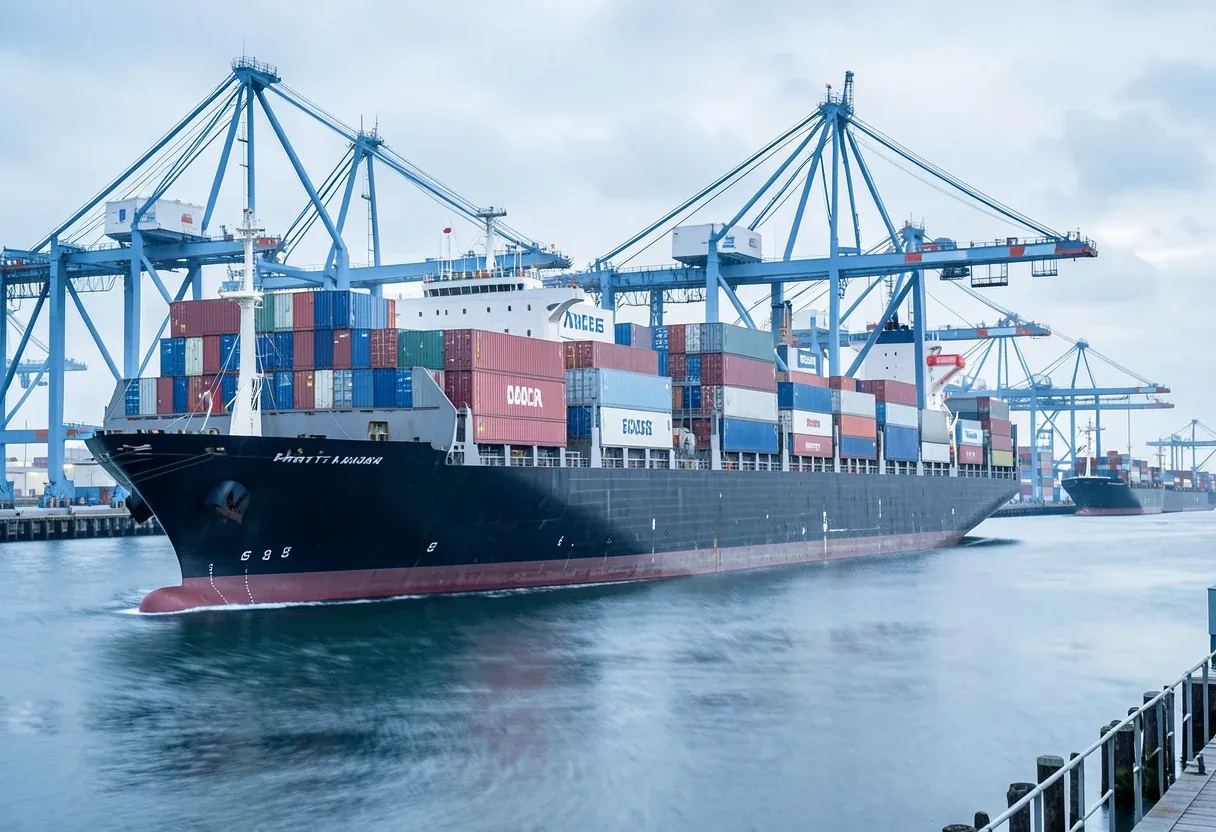
Guangzhou Shipyard International has contracted a bridge builder founded in 1894 to fabricate hull blocks, as the CSSC-controlled yard's construction slots stretch to 2030 and its contracted business approaches RMB100bn ($14bn).
The framework agreement with China Railway Shanhaiguan Bridge Group brings a heavy-steel fabricator with six production bases across China into GSI's shipbuilding operations. GSI said its expanding orderbook and increasingly complex vessel mix will drive up demand for hull blocks over the coming years. Neither the contract value nor the volume of work has been disclosed — a gap worth noting, because framework agreements in Chinese shipbuilding do not always convert into sustained throughput.
Shanhaiguan will allocate fabrication resources to ship blocks and take responsibility for production quality, safety and delivery schedules.
How full is GSI's orderbook?
Very full, and almost entirely export-driven. Overseas orders account for more than 95% of the yard's contracted business, which GSI disclosed earlier this year was approaching RMB100bn — roughly $14bn. Construction slots extend into 2030.
Recent intake includes:
- 10 MR tankers for Evangelos Pistiolis' Central Group
- Four additional MR vessels for Advantage Tankers
- More LNG dual-fuel car carriers for MSC-controlled Global Carriers
GSI is also adding physical capacity. In May it signed a joint venture with Guangdong Port and Shipping Group to develop the 360,000 sq m Xiaohudao shipbuilding base in Guangzhou. A separate project launched in September will build a new facility at Longxue North, which GSI will operate once completed in 2029. That yard is designed to produce up to 18 vessels annually — meaningful volume, but not before the decade's end, which is precisely when the block bottleneck bites.
Are other bridge builders entering shipbuilding?
The Shanhaiguan deal is not isolated. Several Chinese bridge and structural-steel manufacturers have entered shipbuilding this year, taking on fabrication work previously handled by established yards.
In June, China Railway Baoji Bridge Group's Yangzhou subsidiary began manufacturing hull sections for a 73,000 dwt self-propelled deck carrier. The project covers 110 blocks across the vessel's cargo section, the largest weighing about 190 tonnes. Jingjiang Nanyang Shipbuilding is coordinating construction, with China Classification Society overseeing technical and quality requirements.
Jingjiang Heavy Industry followed in September, starting blocks for a 40,400 dwt bulk carrier. The China Railway Construction Corporation subsidiary is fabricating 10 cargo-hold bottom sections weighing up to 96 tonnes each, to be transported to Shanghai for final assembly. The company has built three outdoor block assembly lines and targets annual ship block production of up to 100,000 tonnes, with longer-term ambitions to move into complete vessel construction — a signal that new entrants intend to stay.
Other Chinese builders are expanding fabrication closer to home. Qingdao Beihai Shipbuilding commissioned an expansion of its curved-block workshop in late 2025, adding nearly 23,000 sq m of production space. Shanghai Waigaoqiao Shipbuilding proposed a new block fabrication and assembly facility last year to address capacity constraints and reduce reliance on external subcontractors.
The moves form part of a broader buildout. Broker BRS Group has identified at least seven dormant shipyards being reactivated and a further dozen established facilities expanding capacity.
What does this mean for owners and operators?
For shipowners, the outsourcing wave cuts both ways. It relieves pressure on delivery schedules that have slipped across Chinese and Korean yards since 2022, and it may shorten the effective wait for new tonnage on lanes where fleet renewal is urgent — container, LNG and product tanker segments above all. But blocks fabricated outside traditional maritime supply chains carry integration risk: weld standards, tolerance control and classification oversight all become multi-party exercises, and the quality obligations in the GSI agreement sit with a company whose core business is bridges, not ships.
Korean builders face the same arithmetic and are answering it differently. In April, HD Hyundai Heavy Industries introduced a split-hull construction method for a 157,000 dwt suezmax, outsourcing the 168 m bow section to HSG Sungdong Shipbuilding before joining it to a stern section built at Ulsan. HJ Shipbuilding & Construction has shifted work outside its Yeongdo yard too, contracting Daesun Shipbuilding in February to manufacture deckhouse blocks for eight 7,900 teu containerships after its own facilities reached capacity.
The direction of travel is clear on both sides of the Yellow Sea: fabrication capacity, not demand, is the binding constraint on newbuild output through the decade, and expect more non-maritime manufacturers to be pulled into the supply chain as orderbooks run into 2030.
Source: Splash247
More from Marcus Bennett
Show full bio
Senior reporter covering regulation, policy and their impact on Ocean and air freight, container shipping at Waybill Wire.
530 articles
Related05
Yangzijiang Xinfu delivers first 175,000 cbm LNG carrier from a Chinese private yard
Cosco, BYD and SAIC Anji in $2.5bn car-carrier order spree
Zhonggu Shipping Orders Two 14,000-TEU Boxships at Hudong-Zhonghua
China Closes In on Korea's LNG Carrier Lead as Order Share Jumps to 38.8%
Yangzijiang Maritime orders up to six kamsarmaxes at Watts yard