WW/OCEANFREIG
Greenland Bans Scrber Discharges From 2027, Widening Arctic Rules
Greenland's parliament voted unanimously to ban scrubber discharges — open-loop from July 2027, all systems by 2029 — tightening the Arctic rulebook for cruise operators.
- Desk
- Ocean Freight
- By
- Elena Vasquez
- Filed
- Length
- 620 words
- Read
- 3 min
Key points05
- Open-loop scrubber discharges banned in Greenland waters from July 1, 2027; all scrubber systems covered from July 1, 2029.
- Inatsisartut voted unanimously on Nov. 4 on a proposal from Demokraatit parliamentarian Justus Hansen.
- Greenland received about 94,000 cruise passengers across 232 voyages in 2025, per the Arctic Council.
- S&P Global's 2025 fleet data counted 338 passenger and cruise ships with scrubbers worldwide.
- Canadian Arctic and Norwegian Sea ECAs take effect March 1, 2026 with a 0.10% fuel sulfur cap.
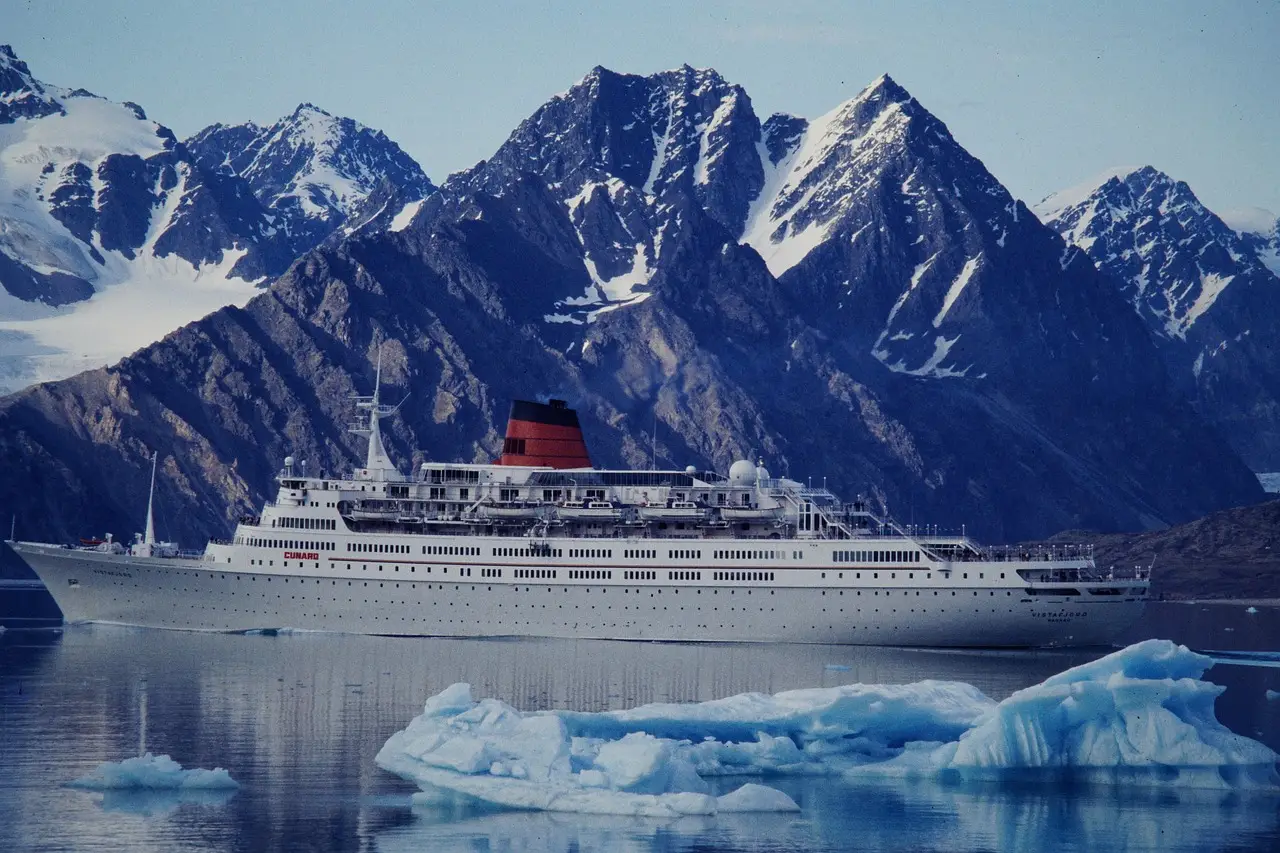
Greenland's parliament has voted unanimously to ban discharges from ships' exhaust gas cleaning systems, with open-loop scrubber wastewater prohibited in the territory's ports, internal waters and territorial sea from July 1, 2027.
The Inatsisartut took the decision on Nov. 4, directing the Greenlandic government to introduce the restrictions. A second phase, effective July 1, 2029, extends the prohibition to all scrubber systems, including closed-loop installations that recirculate washwater but still generate waste streams requiring disposal.
The measure originated with parliamentarian Justus Hansen of the Demokraatit party. The phased timetable follows an emerging regional approach under the OSPAR Convention, which governs the Northeast Atlantic.
Why does the ban target scrubbers?
Scrubbers, formally exhaust gas cleaning systems (EGCS), let ships keep burning higher-sulfur fuel by washing sulfur oxides out of exhaust gases. Open-loop systems use seawater and pump the resulting wastewater straight overboard, carrying sulfur compounds, heavy metals and other contaminants into the marine environment.
The Clean Arctic Alliance welcomed Greenland's decision. Lead adviser Sian Prior said: "Scrubbers simply offer a loophole for ships to continue burning the most polluting fuels – instead of using widely available cleaner fuels such as marine gas oil."
The alliance argues scrubbers shift pollution from the atmosphere into the ocean. Ships fitted with the systems keep burning residual fuels that produce higher levels of particulate matter and black carbon than cleaner distillate fuels.
How does this fit the wider Arctic rulebook?
Greenland's move lands amid a broader tightening of shipping regulation across the Arctic, though the various measures tackle distinct pollution problems:
- March 1, 2026: The Canadian Arctic and the Norwegian Sea become IMO-designated Emission Control Areas, requiring ships to meet stricter nitrogen oxide and sulfur oxide standards, including a 0.10% maximum sulfur content in marine fuel. Norway already operated an ECA covering its North Sea waters.
- Since January 2022: Svalbard has prohibited ships entering its territorial waters from using or carrying petroleum-based fuels with properties exceeding those permitted for marine gas oil.
- July 2024 onward: The IMO's Arctic heavy fuel oil prohibition, adopted under MARPOL Annex I, began taking effect for some vessels. Ships meeting specified fuel-tank protection standards have until July 1, 2029, to comply. That rule addresses HFO spill risk, not scrubber wastewater or black carbon.
Gaps remain. The wider Arctic still lacks a comprehensive ECA covering the entire region, and existing ECAs do not eliminate heavy fuel oil in every circumstance: scrubber-equipped vessels can generally meet sulfur limits while continuing to burn residual fuels.
What does it mean for cruise operators?
The commercial impact on Greenland's cruise sector is hard to size. No public breakdown exists of how many vessels calling in Greenlandic waters carry scrubbers.
The scale of the market is clear, though. Greenland and its surrounding waters received roughly 94,000 cruise passengers across 232 voyages in 2025, according to the Arctic Council. For context, S&P Global's 2025 fleet data identified 338 passenger and cruise ships fitted with scrubbers worldwide — meaning a meaningful share of the global cruise fleet could face constraints in Arctic itineraries.
Affected operators would not necessarily abandon Greenlandic routes or strip out their equipment. The compliant route is straightforward: switch to lower-sulfur fuels such as marine gas oil, which eliminates the need to discharge scrubber wastewater altogether.
That fuel switch carries a cost premium over residual fuel, but it aligns with the direction of Arctic policy across regulators. With Greenland's 2029 full ban, Svalbard's fuel-quality rules and the IMO's HFO phase-out all converging on the same deadline year, scrubber economics in the Arctic look set to deteriorate well before the prohibitions take full effect.
Original: google.com
More from Elena Vasquez
Show full bio
News editor covering people, launches and day-to-day practice in Ocean and air freight, container shipping at Waybill Wire.
721 articles