WW/TRUCKINGRA
FMCSA clears warning beacons for autonomous trucks
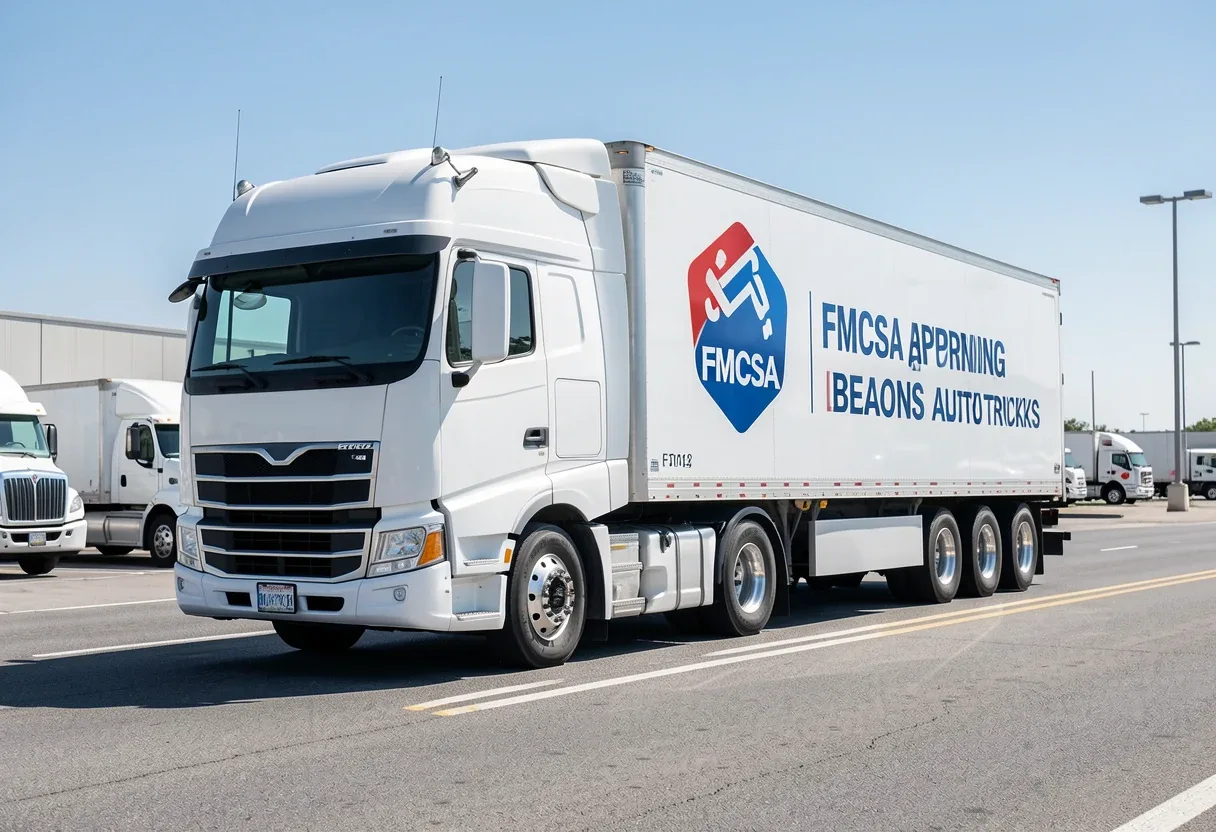
FMCSA approved warning beacons for autonomous trucks, giving Aurora, Kodiak, Plus and TuSimple a federal signaling standard. Driverless operations remain under separate review at FMCSA and NHTSA.
- Desk
- Trucking & Rail
- By
- Elena Vasquez
- Filed
- Length
- 580 words
- Read
- 3 min
Key points05
- FMCSA cleared warning beacons for autonomous commercial trucks, reported by Transport Topics, the latest step in years of federal rulemaking on autonomy equipment.
- The approval covers exterior signaling lights for Class 8 vehicles operating without a human in the cab; fully driverless commercial trucking is not yet authorized.
- The decision affects developers Aurora Innovation, Kodiak Robotics, Plus and TuSimple, plus OEM partners Daimler Truck North America, Volvo Autonomous Solutions and Paccar.
- NHTSA retains vehicle jurisdiction while FMCSA governs carriers and drivers, with a parallel NHTSA exemption track covering trucks built without steering wheels or mirrors.
- Watch the 2025-2026 regulatory calendar: equipment rules clear first, operational driverless rules next.
The Federal Motor Carrier Safety Administration cleared warning beacons for autonomous commercial trucks, an equipment ruling reported by Transport Topics that carriers and truck builders have tracked through years of federal rulemaking. FMCSA has issued a series of Federal Register notices on autonomous-vehicle equipment and operations over the past several years, and the warning-beacon approval is the latest step in that pipeline. The decision lets equipment makers integrate exterior signaling lights — typically amber indicators that pulse or strobe while a truck operates in autonomous mode — into Class 8 vehicles without a human in the seat.
The federal framework has long lacked an external-signaling standard, a gap autonomous-truck operators running pilot routes have pressed FMCSA to close. Other road users — passenger vehicles, law enforcement and work-zone personnel — need a visible cue that an automated driving system is in control of a 40-ton vehicle. The FMCSA ruling gives that cue a federal equipment standard for the first time.
What does the ruling actually change?
The agency has not yet approved fully driverless commercial trucking. Warning beacons address only the vehicle-equipment side of the framework; the operational question of whether autonomous trucks can run without a safety driver remains under separate review at FMCSA and the National Highway Traffic Safety Administration. NHTSA retains jurisdiction over the vehicles themselves, while FMCSA governs the carriers and drivers. What the beacon rule does is let Aurora Innovation, Kodiak Robotics, Plus, TuSimple and other autonomous-truck developers — alongside OEM partners Daimler Truck North America, Volvo Autonomous Solutions and Paccar — begin producing and certifying vehicles with the signaling hardware built in, rather than seeking experimental permits case by case.
Why does the equipment standard matter?
The federal compliance pathway gives OEMs and developers a shared equipment standard for the first time. Paccar has worked with Aurora on autonomous Peterbilt and Kenworth tractors. Daimler Truck North America owns Torc Robotics, its in-house autonomy subsidiary. Volvo Autonomous Solutions has run hub-to-hub pilots in North America. Each program has, until now, designed and sourced signaling hardware independently. The FMCSA standard consolidates that.
Where does the commercial pressure sit?
Carriers running autonomous pilot loads stand to gain the most immediate value. Standardized hardware lets operators move from pilot tractors toward fleet-scale deployments without renegotiating equipment each time a truck crosses state lines. For shippers waiting to procure autonomous capacity on long-haul lanes — the repeatable, predictable freight that autonomous developers have pitched since 2021 — the ruling tightens the procurement timeline but does not change immediate lane economics. A pilot tractor with an FMCSA-approved beacon still requires a credentialed safety driver behind the wheel. Brokers and 3PLs building autonomous capacity into their networks still cannot book a driverless load.
What's the regulatory trajectory?
The decision lands alongside NHTSA's parallel exemption track, which covers vehicles built without traditional controls such as steering wheels and side mirrors. Analysts tracking the autonomous-trucking rollout have pointed to equipment approvals as the leading edge of the federal rulemaking calendar. Once the equipment pipeline clears, attention shifts to the operational rules that determine when a truck can run driverless — and over what lane lengths.
A truck with an FMCSA-approved beacon on the roof today still requires a credentialed driver tomorrow. For freight planners watching the 2025-2026 regulatory calendar, the agency has just retired one of the smaller — yet visible — obstacles between today's pilot runs and a coast-to-coast autonomous lane.
Source: Google News: trucking industry
More from Elena Vasquez
Show full bio
News editor covering people, launches and day-to-day practice in Ocean and air freight, container shipping at Waybill Wire.
497 articles
Related05
FMCSA lets driverless trucks swap warning triangles for flashing beacons
US Grants Self-Driving Trucks Five-Year Beacon Exemption
FMCSA lets driverless trucks swap triangles for cab beacons
78 Truck Drivers Pulled Off Road in Overnight FMCSA-DHS Sweep
FMCSA grants 5-year beacon exemption to AV truck operators