WW/TRUCKINGRA
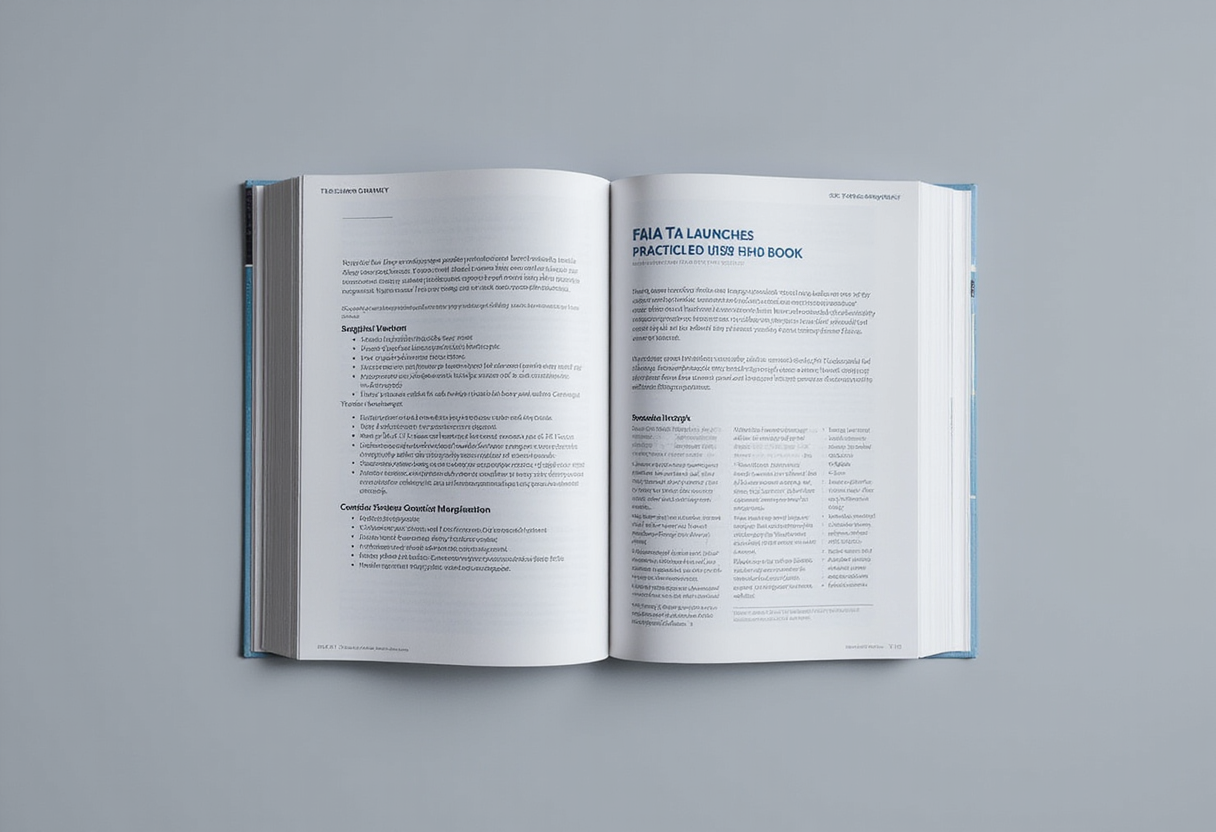
FIATA Ships Practical User Handbook on Multimodal Transport Corridors
FIATA has issued a practical user handbook on multimodal transport corridors, giving forwarders and shippers an operational reference for planning combined rail, road, sea and air routings.
- Desk
- Trucking & Rail
- By
- Amara Osei
- Filed
- Length
- 833 words
- Read
- 4 min
Key points04
- FIATA has launched a practical user handbook covering multimodal transport corridors
- The handbook is aimed at forwarders, shippers, carriers, terminal operators and policymakers
- The guide focuses on hands-on corridor execution rather than policy statements
- FIATA frames the publication as part of its ongoing multimodal transport work programme
FIATA, the global freight forwarders' federation, has launched a practical user handbook on multimodal transport corridors — a hands-on reference intended to help forwarders, shippers and logistics operators plan and execute cargo movements that combine more than one mode of transport. The handbook marks a deliberate shift away from policy papers toward operational guidance. FIATA frames the document as a working tool: something practitioners can open when structuring a corridor move, rather than another statement of principles. The federation represents freight forwarding and logistics associations worldwide, and corridor operations sit squarely inside its members' daily business.
What does the handbook actually do?
According to FIATA, the guide walks users through the practical mechanics of multimodal corridor transport. It is built around the way corridors function in reality: rail, road, sea, inland waterway and air legs stitched into a single chain of carriage, with handover points, documentation and liability questions concentrated at the seams. The stated aim is practical usability. The document gathers corridor-relevant operational knowledge into one place so that a forwarder designing a combined transport routing does not have to assemble the picture from scattered regulatory texts, carrier conditions and infrastructure notes. FIATA positions the handbook as a companion for daily corridor decision-making rather than an academic treatment of intermodal theory. That focus matters commercially. Multimodal corridors — the fixed route combinations linking production centres, ports, border crossings and inland hubs — are where forwarders either capture or lose margin. Dwell at handover terminals, mismatched documentation between legs, and unclear liability allocation between mode-specific conventions all translate directly into cost and transit-time risk. A single reference that standardises how users assess these points can shorten setup time for new routings and reduce claims friction when something breaks mid-chain.
Who is it for?
The target audience is broad by design. FIATA names forwarders as the core users, but the handbook is equally relevant to shippers evaluating corridor options, carriers and terminal operators coordinating across modes, and policymakers who need a ground-level view of where corridor operations bind. For forwarders specifically, the guide functions as an internal training and quality instrument. Corridor knowledge has traditionally lived in the heads of senior operators; codifying it in a handbook makes it transferable, which matters in a sector where multimodal volumes are increasingly won on the ability to document and guarantee complex routings. For shippers, the practical effect is more consistent corridor proposals. When the intermediary side works from a common reference, the quality of route construction, risk disclosure and carrier selection across combined legs should become more comparable between competing forwarders.
Why corridors, and why now?
FIATA's decision to publish a corridor-specific tool reflects how the freight market has moved. Shippers under cost and emissions pressure are actively shifting cargo between modes — road to rail, all-water to rail-sea combinations, short-sea alternatives to trucking — and every such shift runs through a corridor. Operators that understand corridor mechanics capture that diversion flow; operators that stumble at mode interfaces pay for it in claims and lost tenders. The handbook also serves FIATA's institutional role. By producing practitioner-level guidance, the federation reinforces the forwarder's position as the architect of multimodal chains — the party that integrates modes, documents the through-carriage and answers for it commercially. That positioning is contested territory, with carriers and platform operators each pushing their own end-to-end offers.
How should the market use it?
The realistic adoption path is incremental. Larger forwarders will likely benchmark their internal corridor playbooks against FIATA's reference and close any gaps it exposes. Smaller and mid-sized forwarders — the bulk of FIATA's membership base — gain a ready-made framework they could not economically build alone, which levels the field when they bid against global players on combined-transport routings. Training is the other obvious application. The handbook's practical orientation makes it usable in onboarding and in corridor-specific tenders, where teams need a shared vocabulary for handover points, through-documentation and liability allocation across legs. Shippers, for their part, can read it as a due-diligence aid: a sense of what a competent corridor proposal should contain, and the questions to ask when one mode handoff looks thin.
What comes next?
FIATA presents the handbook as part of its continuing work on multimodal transport rather than a one-off publication. The federation has a long-standing agenda on documentation, liability and the commercial framework for combined transport, and the new guide slots into that programme as the operational layer. Practitioners should expect the handbook to anchor further FIATA output on corridors — updates as infrastructure, regulation and modal economics shift, and potentially deeper treatment of individual trade corridors as members feed back field experience. For now, forwarders planning combined-mode routings have a single practical reference to work from, and FIATA has signalled that corridor-level guidance will remain a standing item on its multimodal transport agenda.
The handbook is available through FIATA's official channels.
Source: Google News: air cargo
More from Amara Osei
Show full bio
Staff writer covering marketplaces and e-commerce at Waybill Wire.
257 articles
Related05
TIACA chair urges industry collaboration ahead of October forum
CargoAi deepens CMA CGM AIR CARGO ties with digital allotment push
Six Central American States Launch Regional Maritime Strategy Drive
Tashkent Summit Puts Central Asia's Air Cargo Gateway Bid in Motion
CMA CGM Air Cargo Extends CargoAi Deployment to Allotment Booking