WW/PORTSTERMI
EUROGATE Bets €82 Million on Wilhelmshaven Automation Pilot
EUROGATE has landed an €82 million KfW IPEX-Bank loan to test autonomous trucks, automated cranes and new software at Wilhelmshaven, with Hamburg next in line if the pilot delivers.
- By
- Marcus Bennett
- Filed
- Length
- 591 words
- Read
- 3 min
Key points05
- EUROGATE secured an €82 million loan from KfW IPEX-Bank for its Wilhelmshaven automation pilot.
- The pilot will test autonomous terminal trucks, automated stacking cranes and in-house terminal management software under live conditions.
- Container handling equipment at the terminal will be electrified to cut fossil fuel consumption.
- Hamburg is expected to be the first terminal considered for a wider rollout, contingent on pilot results.
- Quotes: Aida Welker (KfW IPEX-Bank Management Board) and CFO Kristian Ludwig; no timeline or throughput targets were disclosed.
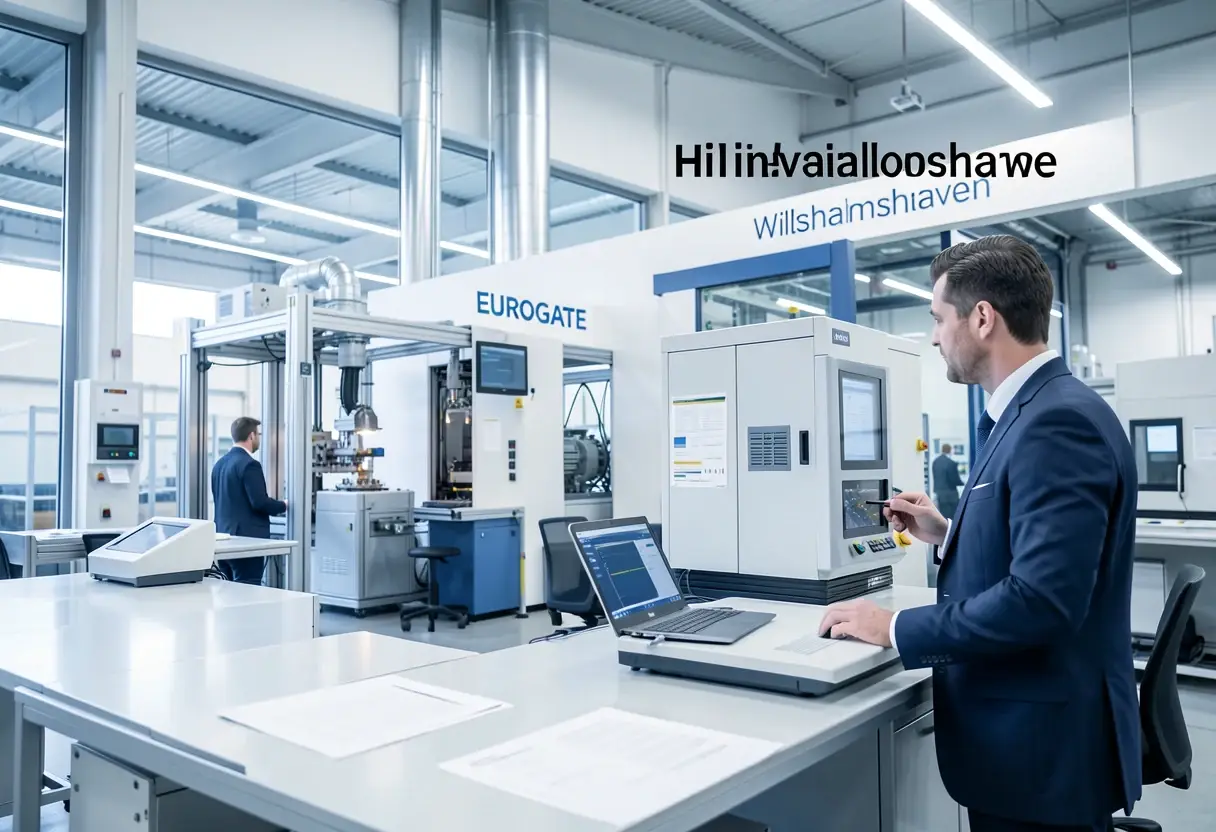
EUROGATE has secured an €82 million loan from KfW IPEX-Bank to build and test automated container handling at its Wilhelmshaven terminal on Germany's North Sea coast. The money funds a pilot, not a network-wide rollout — and the operator itself says wider deployment depends on what the trial proves.
The scale is modest against the ambition. Eighty-two million euros will finance autonomous terminal trucks moving boxes between the quay and automated stacking cranes, new terminal management software developed in-house, and electrification of container handling equipment. EUROGATE expects the package to cut operating costs and fossil fuel consumption while raising handling efficiency. No throughput targets, TEU figures or headcount reductions appear anywhere in the announcement — a gap worth noting for anyone expecting quantified productivity claims.
What will the pilot actually test?
Three technology streams will run under live operating conditions at Wilhelmshaven:
- Autonomous terminal trucks (ATTs) shuttling containers between the quay wall and the automated stacking cranes.
- Automated stacking cranes (ASCs) receiving and storing those boxes.
- EUROGATE's own terminal management software orchestrating the automated flows.
The electrification element is the decarbonisation lever. Replacing diesel-driven handling equipment with electric systems should reduce fossil fuel use, though neither EUROGATE nor the bank has published projected fuel savings in cubic metres, tonnes of CO2 or euros per move. KfW IPEX-Bank frames the pilot as a way to assess the performance and operational readiness of the planned system before anyone commits capital to it at scale.
That sequencing matters commercially. Automation projects at European container terminals have a mixed record: Rotterdam's Maasvlakte II operated for years at a loss before adjustments, and several German ports have moved cautiously. EUROGATE is effectively buying an option rather than a fleet — it pays €82 million to find out whether autonomous transport, automated cranes and digital systems can function together in real traffic before deciding on wider deployment.
Where could the technology spread?
Wilhelmshaven is the testbed, but not the endgame. Results from the pilot will drive the decision on rolling the technology across EUROGATE's German network. Hamburg is expected to be the first candidate for a future rollout, followed by other German terminals in the group — a qualification the announcement repeats twice, in case the message was missed: nothing beyond Wilhelmshaven is committed yet.
For carriers and shippers using Germany's only deep-water port, the near-term operational impact is limited to a test environment. The longer-term stakes are different. If the pilot succeeds, EUROGAVE's German terminals gain a cost and velocity edge in a market where Hamburg's centrality has eroded and Bremerhaven fights for feeder and transshipment volume. If it fails, the group will have spent €82 million learning where the limits of terminal autonomy lie — knowledge that still carries value for an industry watching these trials closely.
Aida Welker, Member of the Management Board of KfW IPEX-Bank, framed the deal in policy terms rather than operational ones: "Together with EUROGATE, we are sending a clear signal in favour of modernising port logistics and the associated strengthening of Germany as a business location."
EUROGATE Chief Financial Officer Kristian Ludwig highlighted the bank's role in structuring the financing but offered no additional operational detail. The absence of a stated timeline for the pilot — no start date, no completion date, no defined success metrics — leaves observers without the benchmarks they would need to judge the project's progress. Until EUROGATE publishes performance data from Wilhelmshaven, the €82 million buys a promise, not a proven system.
Source: Container News
More from Marcus Bennett
Show full bio
Senior reporter covering regulation, policy and their impact on Ocean and air freight, container shipping at Waybill Wire.
553 articles
Related05
Eurogate orders four ASCs from Konecranes for Wilhelmshaven
Antwerp-Bruges moves autonomous trucks from demo to revenue service
DP World puts €100m behind Constanța terminal electrification
Two Final Quay Cranes Land at DP World Southampton, Capping £60m Programme
Daimler Truck maps Europe's electric truck gap: 35,000 megawatt chargers needed by 2030