WW/OCEANFREIG
Drones Hit Three Ships Near Romania's Sulina Canal, NATO Jets Scramble
Drones struck three ships near Romania's Sulina Canal, prompting fighter jet scrambles and pushing the Black Sea maritime war to within 12 km of NATO waters.
- Desk
- Ocean Freight
- By
- Tom Whitfield
- Filed
- Length
- 618 words
- Read
- 3 min
Key points05
- Three vessels — Evia Petrol V, Marsol and Ali Najafov — hit by drones near the Sulina Canal; fires extinguished, no casualties
- Larissa 1 struck Friday ~12 km off the Romanian coast at Sfântu Gheorghe, damaging a cargo crane
- Romanian fighter jets scrambled twice after aerial threats near territorial waters
- Ukraine struck TAIF-NK refinery and Nizhnekamskneftekhim in Tatarstan, over 1,000 km inside Russia
- EU naval forces boarded shadow-fleet tanker Midag in the Mediterranean; satellite imagery shows at least 5 burned tanks at Ust-Luga
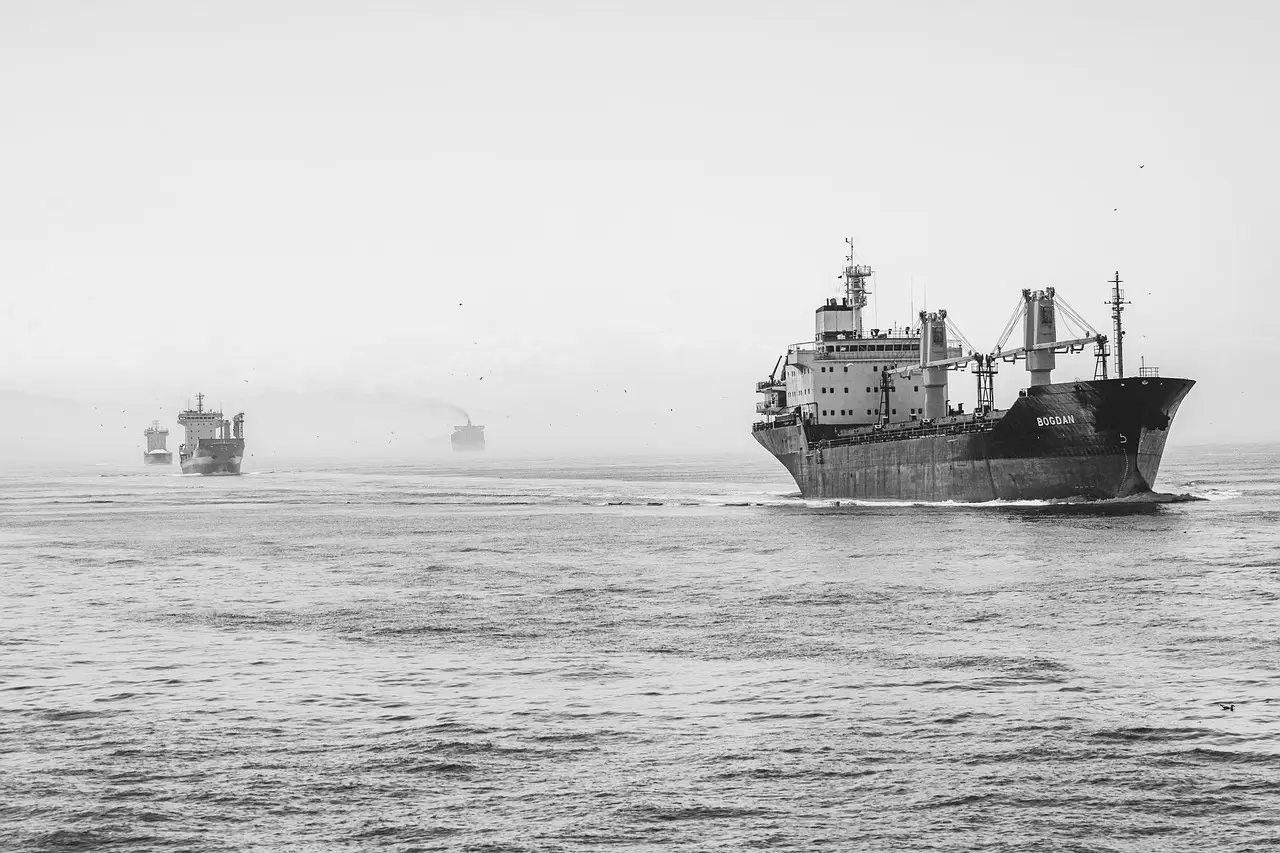
Three commercial vessels were struck by drones near Romania's Black Sea coast over the weekend, forcing Bucharest to scramble fighter jets twice and pushing the Russia-Ukraine maritime war to the edge of NATO territory.
Romanian prime minister Luca Niculescu confirmed on Sunday that three ships had been attacked near the Sulina Canal — the shipping artery linking the Danube to the Black Sea and a workhorse route for Ukrainian exports. The canal matters. Grain and bulk flows through the Danube ports have been a lifeline for Kyiv since the war began, and any threat this close to the channel tightens risk premia on every voyage.
The vessels identified in weekend reports:
- Evia Petrol V — Greek-flagged product tanker
- Marsol — St Kitts and Nevis-flagged bulk carrier
- Ali Najafov — product tanker
Fires broke out on the affected ships. Crews extinguished them. No casualties were reported, which is the only good news in the story.
A fourth strike came earlier. On Friday evening, the Palau-flagged cargo ship Larissa 1 was reportedly hit near Sfântu Gheorghe, roughly 12 km from the Romanian coast. The attack damaged one of its cargo cranes. The ship was reportedly heading towards Ukraine.
Romania's armed forces scrambled fighter aircraft on two separate occasions after detecting aerial threats near its territorial waters — the clearest signal yet that the drone war has drifted within striking distance of a NATO member's coastline.
"These incidents are unacceptable and constitute a violation of international law," Niculescu said.
Romanian authorities have not established the origin of the drones. Officials did, however, link the incidents to the widening consequences of Russia's war against Ukraine. That ambiguity matters legally and commercially: unattributed attacks complicate insurance triggers, war-risk pricing and charterparty disputes.
What does this change for Black Sea shipping?
For shipowners and charterers, the immediate question is risk geography. Strikes at 12 km from Romanian waters put neutral-tonnage calls at Danube ports and the Sulina approach in a darker risk bracket. War-risk underwriters will reprice; operators serving Ukrainian export corridors will weigh harder routing decisions. Freight rates on the lane rarely move on single incidents — but a cluster this close to NATO waters can.
For NATO, the calculus is political. An attack inside Romanian territorial waters would test Article 5 thresholds in a way the alliance has so far avoided.
Ukraine's long-range campaign keeps expanding
The sea incidents came as Ukraine escalated its campaign against Russian energy infrastructure. Over the weekend, Ukrainian forces struck the TAIF-NK refinery and the neighbouring Nizhnekamskneftekhim petrochemical complex in Tatarstan — more than 1,000 km inside Russia — triggering fires at both facilities.
Fresh satellite imagery published on Sunday also laid bare the damage from Ukraine's November 11 attack on Ust-Luga, Russia's Baltic export port. At least five petroleum storage tanks were burned out. Ust-Luga handles a substantial share of Russia's fuel exports, and persistent damage there squeezes the country's ability to move refined products by sea.
Shadow fleet pressure tightens
The expanding maritime confrontation runs parallel to a European crackdown on Russia's shadow fleet. EU foreign policy chief Kaja Kallas confirmed on Sunday that European naval forces boarded the tanker Midag in the Mediterranean on Friday, establishing that it was sailing under a false flag.
EU foreign ministers were due to consider further sanctions on Monday, targeting banks, buyers and companies supporting the shadow fleet.
With drone strikes now reaching NATO's littoral, refineries burning deep inside Russia, and sanctions closing on the tanker network that moves Russian oil, the maritime war is widening on every front — and shippers on the Black Sea lanes will be pricing that reality this week.
Source: Splash247
More from Tom Whitfield
Show full bio
Market editor covering companies, deals and strategy in Ocean and air freight, container shipping at Waybill Wire.
923 articles
Related05
Drones Hit Three Ships in Romanian Waters Near Sulina Canal
Four vessels hit by drones off Romania in three days of attacks
Two Tankers Ablaze off Romania, Seven Crew Missing as Drone Strikes Reach Danube Gateway
Drone Strike Sinks Tanker Off Constanta; One Dead, Three Missing
Drone Strike Hits Tanker Inside Romanian Territorial Waters