WW/TRUCKINGRA
Democratic Majorities and Trucker Bathroom Bill Top Trucking Agenda
Democrats will hold at least 255 House and 55 Senate seats in January, while a Senate committee votes next week on the Trucker Bathroom Access Act backed by ATA.
- Desk
- Trucking & Rail
- By
- Marcus Bennett
- Filed
- Length
- 808 words
- Read
- 4 min
Key points05
- Democrats won at least 255 House and 55 Senate seats in the November 3 midterms.
- Senate Commerce Committee votes next week on the Trucker Bathroom Access Act.
- Congress must pass a funding extension by December 11 or risk a government shutdown.
- Senate Appropriations has released 7 of 12 FY2027 draft bills.
- NDAA may include the Combating Organized Retail Crime Act for cargo theft response.
At least 255 House seats and 55 Senate seats will sit with Democrats when the 120th Congress convenes in January, a midterm sweep driven largely by affordability concerns that resets the policy terrain for trucking over the final two years of the Trump presidency. Republicans are guaranteed at least 170 House seats, with ten not yet called, and at least 44 Senate seats, with Alaska still counting ballots in a race too close to call.
The numbers are decisive, but committee arithmetic matters more for freight. Sen. Sheldon Whitehouse (D-RI) takes the gavel of the Senate Judiciary Committee, which holds jurisdiction over ATA-supported bills to curb lawsuit abuse. Sen. Jeff Merkley (D-OR) will chair the Senate Environment & Public Works Committee, overseeing the FHWA and EPA. In the House, Rep. Rick Larsen (D-WA) leads Transportation & Infrastructure, and Rep. Frank Pallone (D-NJ) returns to Energy & Commerce.
Leadership contests are also in motion. House Republicans elected Rep. Jim Jordan (R-OH) as Minority Leader, while Sen. Chuck Schumer (D-NY) faces a challenge from Sen. Chris Van Hollen (D-MD) for Senate Majority Leader. The American Trucking Associations says it will work with committee leaders on both sides of the aisle — a standard formulation, though one that will be tested against a chamber-wide shift in priorities.
What does the Trucker Bathroom Access Act do?
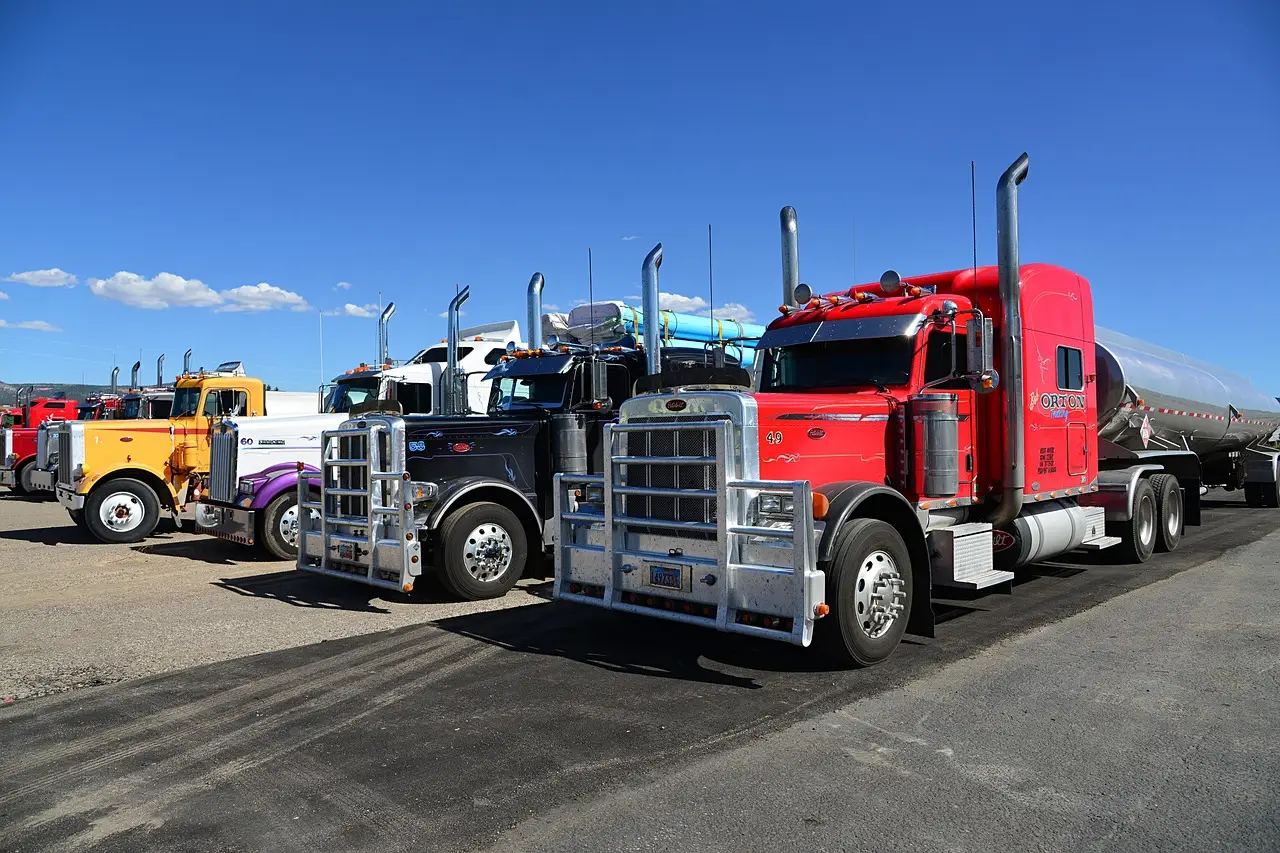
The most concrete near-term item for drivers is the Trucker Bathroom Access Act, introduced in the Senate last Wednesday by Sens. Lisa Blunt Rochester (D-DE) and Deb Fischer (R-NE). The bill would guarantee truckers access to publicly available restrooms at facilities they serve. The Senate Commerce, Science, and Transportation Committee is scheduled to vote on it next week. A House companion, introduced by Reps. Troy Nehls (R-TX) and Chrissy Houlahan (D-PA), cleared the House Transportation & Infrastructure Committee in May as part of the Build America 250 Act.
"Truckers are the heartbeat of our economy and critical to supply chain continuity," said Henry Hanscom, Chief Advocacy & Public Affairs Officer of the American Trucking Associations. "When drivers stop to make pickups or deliveries — which can take hours on end while waiting to be loaded or unloaded — they should be able to use restroom facilities."
Hanscom framed the bill as both a dignity issue and a retention lever, noting it can help reduce a barrier to recruiting drivers, particularly women. That claim aligns with persistent driver-shortage concerns, though the legislation itself mandates access, not enforcement mechanisms — details that would emerge in implementation.
What else moved last week?
The House passed the Cybersecurity for Small Businesses Act, sponsored by Rep. Tony Wied (R-WI), an ATA Moving & Storage Conference priority highlighted at its 2026 Call on Washington. The bill requires the Small Business Administration, working with the Department of Defense, to spell out cybersecurity requirement levels for DOD's Cybersecurity Maturity Model Certification — the credential companies need to serve DOD facilities, including movers handling military household goods.
The Senate also cleared procedural votes allowing debate on the Bipartisan American Affordability and Jobs Act of 2026, a permitting reform package covering transmission, generation, geothermal, hydropower, mining, and offshore energy. It would exempt highway projects proposed in existing rights-of-way from NEPA review — a provision with direct relevance to freight corridor timelines. Negotiators included EPW Chairman Shelley Moore Capito (R-WV), Ranking Member Whitehouse, Energy Chairman Mike Lee (R-UT), and Ranking Member Martin Heinrich (D-NM). The House Problem Solvers Caucus is pushing for consideration before the 119th Congress ends.
What happens before January?
Two must-pass items dominate the lame duck: the National Defense Authorization Act and full federal funding through September 30, 2027. The NDAA will likely carry the Combating Organized Retail Crime Act, a bipartisan bill directing resources to DHS to coordinate a national cargo theft response with state and local law enforcement. Its path is complicated by the Administration's $1.5 trillion funding request, the conflict in Iran, and incoming Democratic majorities seeking guardrails on the White House.
The FY2027 appropriations include truck parking funding and requirements that agencies finalize hair-testing guidance for drug detection in CMV operators. The Senate Appropriations Committee has released 7 of 12 draft bills. Both chambers must pass a short-term extension by December 11 or trigger a shutdown, with final debate likely slipping into next year.
Nomination hearings on November 10 pressed remaining nominees through, including Leslie Becera for Assistant Secretary of Transportation. ATA backed Justin Schwab, nominated for EPA Assistant Administrator for Air and Radiation, telling senators it wants "ambitious and achievable" federal emission standards for trucking — a standard whose definition both parties will now debate under new chairmanship.
With Democrats holding gavels from January, trucking's legislative asks shift from friendly committees to divided terrain, and the December 11 funding deadline is the first test.
Source: trucking.org
More from Marcus Bennett
Show full bio
Senior reporter covering regulation, policy and their impact on Ocean and air freight, container shipping at Waybill Wire.
887 articles