WW/PROCUREMEN
China Energy Engineering lands $144m offshore wind grid deal
China Energy Engineering's Guangdong institute won a RMB1.0267bn ($144m) EPC contract to build 500kV offshore transmission for two 400MW wind farms off Jiangmen, Guangdong.
- By
- Tom Whitfield
- Filed
- Length
- 585 words
- Read
- 3 min
Key points05
- China Energy Engineering's Guangdong Electric Power Design Institute won an EPC contract bid at RMB1.0267bn ($144m).
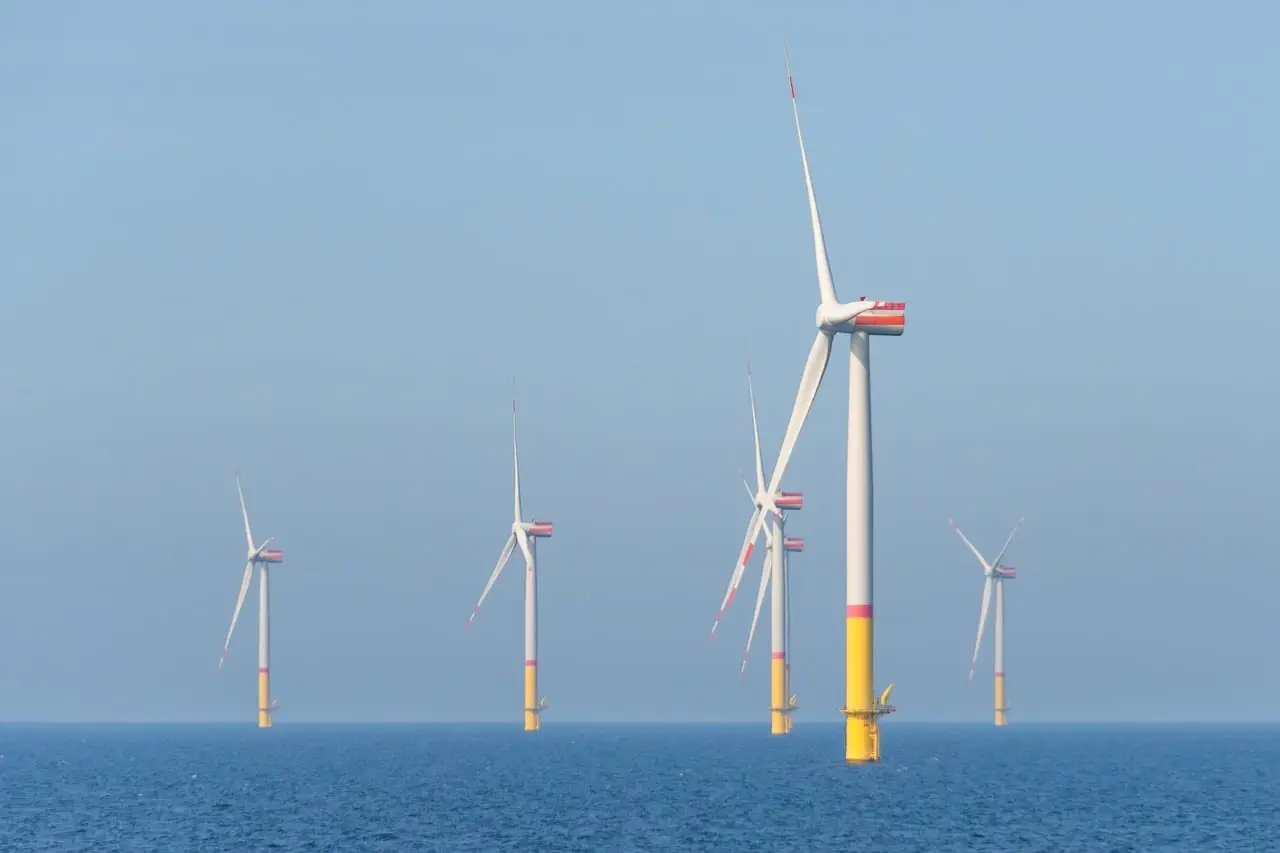
- The contract covers offshore electrical infrastructure for the Jiangmen Chuandao I and II wind farms, 400MW each, totalling 800MW.
- Scope includes a 500kV offshore booster station and reactive-power compensation station, plus installation and commissioning.
- The wind farms sit approximately 62 km and 68 km offshore Jiangmen, with Chuandao II in waters 39–45 m deep.
- Power flows via 66kV subsea collector cables to the booster station, then through two 500kV export circuits to a landing point near Taishan.
China Energy Engineering's Guangdong Electric Power Design Institute has secured an EPC contract worth RMB1.0267bn ($144m) to build the offshore electrical backbone for two wind farms totalling 800MW off Guangdong province, China's National Energy Group has confirmed.
The award covers the Jiangmen Chuandao I and II offshore wind developments, each planned at 400MW. The contractor's bid of RMB1.0267bn appeared in an earlier tender announcement; the final contract value has not been separately disclosed.
What does the contract actually cover?
The scope is a full engineering, procurement and construction package for transmission infrastructure rather than the turbines themselves. It includes:
- engineering and design work
- equipment procurement
- fabrication
- transportation
- offshore installation
- commissioning of a 500kV offshore booster station and a reactive-power compensation station
The contractor will also handle associated electrical infrastructure work and coordinate interfaces with a separately procured export cable package. That split matters. It means heavy marine transport and installation tonnage is booked under this contract, while the 500kV submarine export circuits follow their own procurement track.
Where exactly are the wind farms?
The two developments sit roughly 62 km and 68 km offshore Jiangmen, in Guangdong province. Chuandao II occupies waters between 39 and 45 metres deep — depths that push installation toward larger jack-up vessels and heavier foundation logistics.
The power flow is a three-step climb. Turbines will collect power through 66kV subsea cables and feed it to the offshore booster station, where voltage steps up to 500kV. The electricity then passes through the offshore compensation station before reaching a landing point near Taishan and connecting to the onshore grid.
Why one shared transmission system?
The design answers a simple cost question. The shared transmission infrastructure is built to accommodate both developments, with the export system featuring two 500kV submarine cable circuits. One booster station, one compensation station, two circuits — serving 800MW of combined capacity from a single electrical corridor rather than duplicated systems.
For equipment suppliers and marine contractors, that architecture concentrates demand. A single 500kV offshore platform is a heavy, complex fabrication job, and the 66kV inter-array cabling across two sites 400MW each adds up to a substantial subsea cable volume, all of it now tied to one EPC player's procurement decisions.
What does this change for the supply chain?
For China Energy Engineering, the win consolidates its position in high-voltage offshore transmission, a niche that grows as Chinese wind projects push further from shore. Jiangmen Chuandao's distance — beyond 60 km out — is precisely why the project needs a 500kV booster station at all; nearer-shore farms have typically managed with lower-voltage export systems.
For subcontractors, the contract opens a pipeline: fabrication of the booster and compensation stations, vessel charters for offshore installation, transportation of major electrical equipment, and commissioning work all sit inside the awarded scope. The separate export cable procurement, meanwhile, keeps a second tender stream alive for cable makers and installation vessel operators.
For the National Energy Group as developer, the deal moves both 400MW projects closer to construction with the transmission bottleneck — often the schedule-critical path on far-offshore wind — now contracted at a defined price point of RMB1.0267bn from a single accountable EPC contractor.
The contract's confirmation signals that Jiangmen Chuandao I and II are advancing from planning into execution, with fabrication, transport and offshore installation phases ahead — and with China's offshore wind build-out in Guangdong continuing to generate demand for high-voltage offshore infrastructure contracts of this scale.
Source: Splash247
More from Tom Whitfield
Show full bio
Market editor covering companies, deals and strategy in Ocean and air freight, container shipping at Waybill Wire.
796 articles
Related05
CM Energy Reports ASSO Subsea Cable-Lay Equipment Contract
GSI outsources hull blocks to 1894-founded bridge builder as slots fill to 2030
CMES locks in $2.8bn Simandou VLOC contract
NMDC Energy lands $763m Saudi Aramco offshore EPC awards
Fujian Guohang to build 12 Hong Kong shipowning units for $372m newbuild push