WW/PORTSTERMI
Chennai's CCTPL Posts Decade-High 89,743 TEU Month
CCTPL at Chennai Port handled 89,743 TEUs in September, its highest monthly container throughput in ten years, signaling renewed carrier and shipper confidence on India's east coast.
- By
- Elena Vasquez
- Filed
- Length
- 462 words
- Read
- 2 min
Key points03
- CCTPL handled 89,743 TEUs in September, a ten-year monthly high for the Chennai Port terminal
- The benchmark strengthens the case for direct carrier calls and reduces feeder transhipment reliance for Chennai hinterland cargo
- October–November volumes will show whether September is a seasonal peak or a new throughput baseline
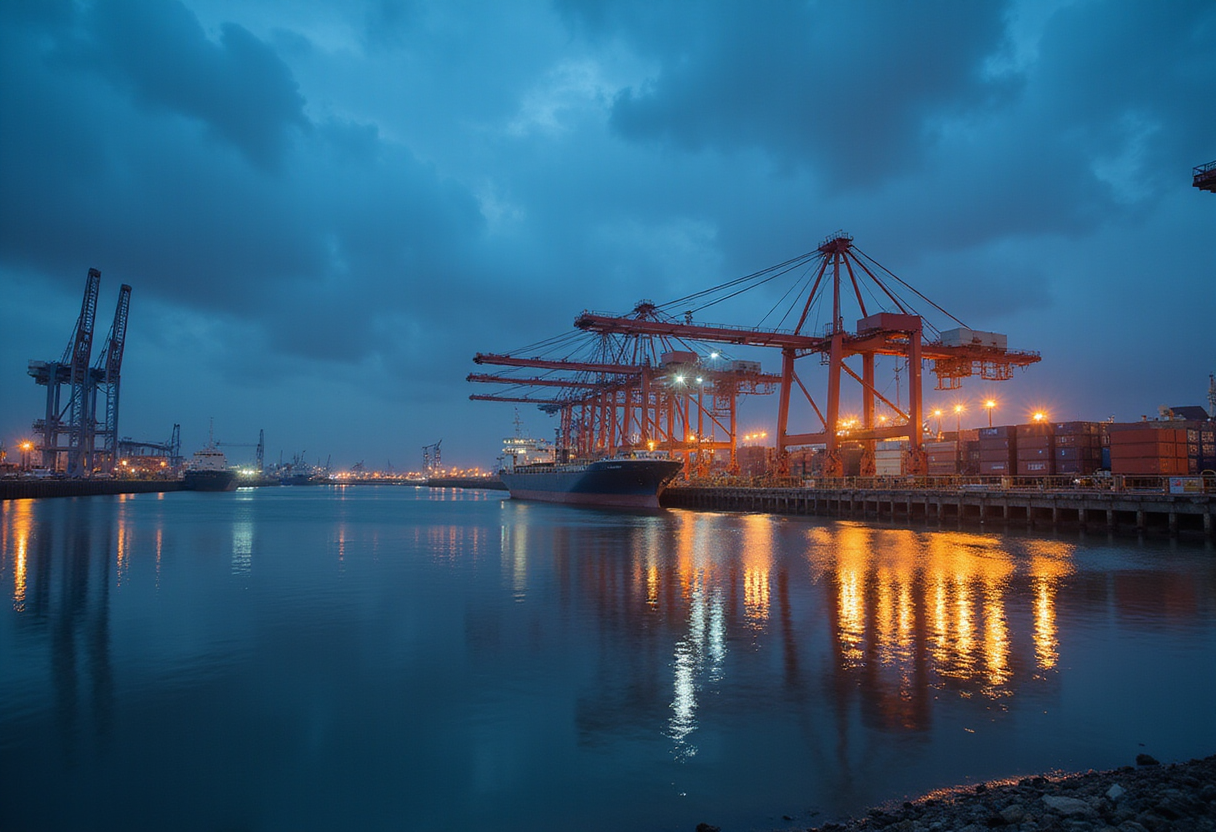
Chennai Container Terminal Private Limited (CCTPL) at Chennai Port handled 89,743 TEUs in September, the terminal's strongest monthly container throughput in a decade and a benchmark that puts one of India's key east-coast gateways squarely back on the growth map.
The September figure is the highest monthly container volume CCTPL has recorded in ten years. For a terminal that has spent much of the past decade competing against newer, deeper-draught facilities along India's eastern seaboard, the number signals a tangible recovery in cargo commitment rather than a one-off spike.
Chennai Port remains a critical gateway for the industrial hinterland of Tamil Nadu — automotive plants, engineering goods manufacturers and textile exporters among them — feeding services across the Bay of Bengal to Southeast Asia and onward to the Far East, Europe and beyond via transhipment hubs. When volumes at the terminal climb to decade highs, the immediate beneficiaries are the ocean carriers deploying tonnage on Chennai calls and the shippers who gain access to denser sailings and more competitive slot pricing.
For forwarders and beneficial cargo owners routing through Chennai, a terminal running at elevated throughput carries two commercial implications. First, higher sustained volumes strengthen the business case for carriers to maintain or add direct calls, reducing reliance on feeder transhipment through Colombo, Singapore or Port Klang and shortening end-to-end transit times. Second, a busier terminal tests the terminal's landside infrastructure — gate throughput, yard density and rail connectivity — meaning shippers should expect berth windows and evacuation cycles to come under closer scrutiny as volumes hold.
The timing matters. Indian container traffic has been on a broad upward trajectory, with ports on both coasts posting record or near-record fiscal-year volumes. A decade-high month at CCTPL suggests east-coast cargo is participating fully in that expansion, not merely watching western gateway rivals such as Nhava Sheva absorb the growth. Carriers evaluating network deployments in the region will read the September number as evidence that Chennai-originating demand can support additional capacity.
For the terminal itself, the benchmark re-establishes CCTPL as a volume engine at Chennai Port after years in which competing facilities — both within the port and at neighbouring east-coast gateways — chipped away at its share. Monthly throughput above 89,000 TEU, sustained, would place the terminal firmly among the top-performing container facilities on India's eastern coastline.
The question for the fourth quarter is whether September represents a seasonal peak or a new baseline. Carriers, shippers and forwarders will be watching October and November volumes closely: if CCTPL holds near the 89,743 TEU mark, expect carriers to revisit slot allocations on Chennai services and the terminal to accelerate investment in handling capacity to defend its newly reclaimed position.
Source: Google News: container shipping
More from Elena Vasquez
Show full bio
News editor covering industry trends and analytics at Waybill Wire.
144 articles
Related05
CONCOR moves first own-container export from ICD Khodiyar to Singapore
'Data Centers Are the New Ports' – APEC Finance Ministers Weigh Funding Push
Container Fleet Growth Set to Hit 9% in 2027
Colombo Transhipment Boom Piles Cost Pressure on India-US Flows
Asia Port Congestion Could Persist Into 2027, Analysts Warn