WW/OCEANFREIG
Carriers Crowd Into San Pedro Bay, Squeezing Shipper Options
Long Beach set an August record with TEU up 2% YoY as carriers concentrate on San Pedro Bay, while Oakland, Seattle and Tacoma tonnage slumps, limiting shipper routing options.
- Desk
- Ocean Freight
- By
- Elena Vasquez
- Filed
- Length
- 492 words
- Read
- 2 min
Key points03
- Port of Long Beach posted a record August throughput, up 2% year on year in TEU
- Tonnages slumped at Oakland and the NWSA ports of Seattle and Tacoma as carriers concentrate on San Pedro Bay
- Fewer gateway options leave shippers with less flexibility to navigate bottlenecks and disruption
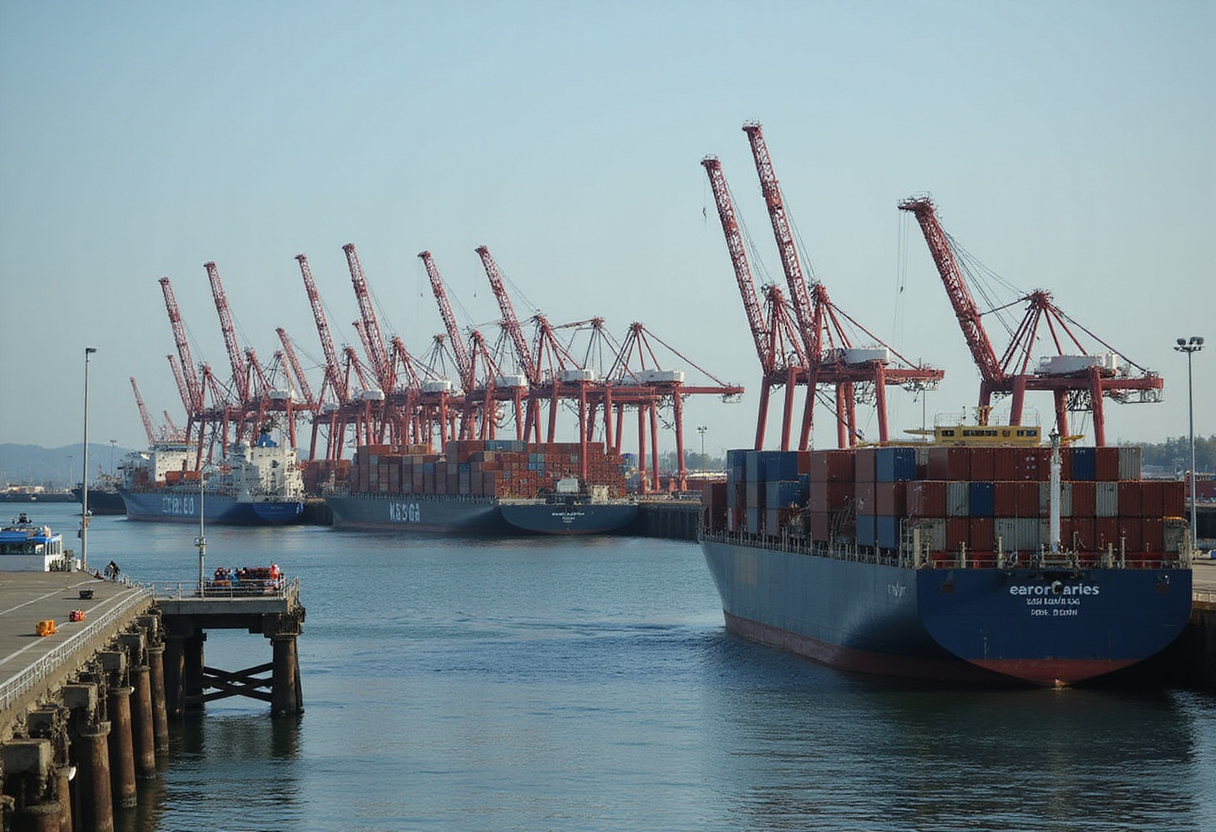
Long Beach posted a record August throughput, lifting its TEU count 2% year on year, as the San Pedro Bay port complex continued to process volumes through the summer at levels it has never handled before.
The flip side of that concentration is stark. Tonnages have slumped at the port of Oakland and at the Northwest Seaport Alliance (NWSA) gateways of Seattle and Tacoma, as carriers focus their deployments on Southern California and largely bypass the Pacific Northwest and Northern California calls.
For cargo owners, the shift carries a direct commercial cost: fewer routing options when bottlenecks or disruption hit. With services consolidated around Los Angeles and Long Beach, shippers that once could divert cargo through Oakland, Seattle or Tacoma to escape congestion in San Pedro Bay now have far less spare capacity to work with. The traditional playbook of switching gateways to manage inland distribution or dodge queue times is narrowing to a single, crowded corridor.
Carriers have effectively voted with their tonnage. Record volumes flowing through the Los Angeles–Long Beach complex through the summer indicate that alliance networks have concentrated sailings on the lane pairs with the deepest demand, leaving secondary West Coast ports with thinner schedules. Fewer calls mean lower utilisation economics for the northern gateways and reduced competition for shippers' freight in those markets — a dynamic that tends to soften carriers' incentive to restore coverage quickly.
The consequences run in both directions. Shippers routing through San Pedro Bay benefit from the densest sailing frequency on the West Coast, but they wear the exposure that comes with putting record cargo through a single complex: any disruption there — labour action, congestion, a demand spike — now lands on a larger share of transpacific capacity than before. Shippers and forwarders using Oakland, Seattle and Tacoma, meanwhile, face a thinner service matrix and fewer alternatives of their own should their preferred gateway hit problems.
For forwarders, the calculus is equally awkward. Routing decisions that once balanced cost, transit time and risk across multiple West Coast doorways now hinge on a smaller set of options, which limits their ability to offer differentiated products to customers during periods of stress. Diversification strategies that leaned on the Pacific Northwest as a pressure valve are harder to execute when tonnage there has fallen away.
The record-setting August at Long Beach, up 2% year on year in TEU terms, underlines how firmly the demand weight sits with San Pedro Bay. That 2% gain on an already elevated base pushed the port to a new monthly high, while the northern gateways moved in the opposite direction — a divergence that reshapes the competitive map of the US West Coast rather than merely reflecting a temporary swing.
Unless carriers see a commercial case to rebalance deployments — through restored Pacific Northwest and Oakland calls or through shippers' willingness to redirect meaningful volumes north — the pattern of concentrated risk and constrained choice looks set to persist into the coming scheduling cycles.
Source: The Loadstar
More from Elena Vasquez
Show full bio
News editor covering industry trends and analytics at Waybill Wire.
144 articles