WW/TRUCKINGRA
Autonomous truck fleets win 5-year exemption on warning beacons
Autonomous-truck fleets have secured a five-year exemption from federal warning-beacon requirements, giving AV operators a longer runway for commercial driverless runs through 2030.
- Desk
- Trucking & Rail
- By
- James Calloway
- Filed
- Length
- 591 words
- Read
- 3 min
Key points05
- AV truck fleets won a 5-year exemption from federal warning-beacon requirements, per FreightWaves.
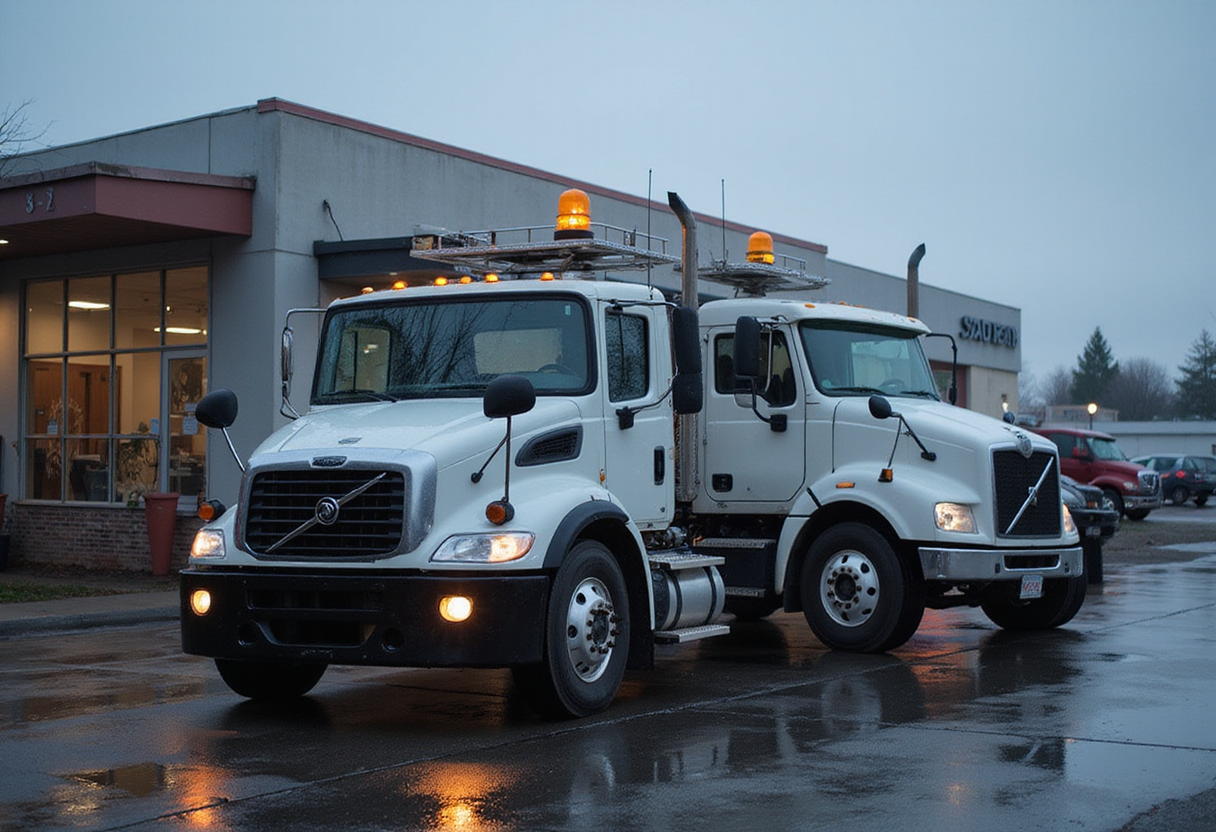
- The exemption covers cab-mounted amber strobe rules normally applied to nonstandard vehicles on public roads.
- FreightWaves did not name the specific carriers or platform developers covered by the grant.
- The exemption runs through 2030, the longest confirmed regulatory window for AV trucking to date.
- State-level rules in California are not preempted by the federal action.
What just changed for AV trucks on the road
Autonomous-truck operators won a five-year exemption from federal warning-beacon requirements, according to a FreightWaves report published this week, opening a longer runway for commercial driverless runs on U.S. highways.
The exemption frees AV fleets from the cab-mounted amber strobe rules that normally apply to unconventional vehicles operating on public roads. Operators can run routes without the flashing beacons for the full five-year window, a stretch long enough to cover the first wave of scaled commercial deployments carriers have been staging in Texas, Arizona and the Sun Belt corridors.
Which fleets are covered
FreightWaves did not name the specific carriers or platform developers that secured the exemption in its initial report. The publication's headline frames the action as a fleet-level win rather than a single-company grant, suggesting the regulator cleared a category of AV operators rather than one applicant.
Waybill Wire has asked FreightWaves for the underlying filing and the agency docket number. The Federal Motor Carrier Safety Administration and the National Highway Traffic Safety Administration have, in recent years, processed exemption requests for companies including Aurora, TuSimple (now rebranded), Kodiak Robotics and Gatik, though the report does not confirm which of those — if any — sit inside this particular five-year grant.
What warning beacons do, and why fleets want them off
Warning beacons are the amber strobes mounted to the roof of a slow-moving or oversized vehicle. They signal to passenger drivers that something nonstandard is sharing the lane. For a conventional truck that is useful. For a Class 8 tractor running without a human in the cab, the strobe is redundant noise.
Removing the beacon also removes a visible cue that the truck has no driver, a marker some operators and law-enforcement groups have flagged as a public-awareness issue. The five-year runway suggests the regulator is comfortable enough with AV identification through signage and paint schemes to step back the strobe requirement.
Commercial read for shippers and carriers
The exemption lowers a small but real compliance cost on every AV-controlled mile. No beacon hardware, no maintenance, no replacement cycle, and one less item on the pre-trip inspection list for fleets running driverless or supervised-autonomy routes.
For shippers, the practical effect lands inside the lane economics. Texas-to-Florida and Dallas-to-Houston corridors — the early commercial proving grounds — should see a cleaner operating envelope for AV partners over the next 60 months. That matters less for spot rates today and more for the long-run cost curve carriers quote on autonomous tenders through 2030.
For 3PLs and forwarders, the signal is regulatory, not commercial. The five-year term is long enough to underwrite a multi-year AV lane commitment without worrying about a mid-contract policy reversal.
What remains unanswered
FreightWaves' report does not spell out the exemption's conditions, its operational scope, or whether it covers supervised autonomy as well as fully driverless runs. The piece also does not state which agency issued the grant — a meaningful distinction, since FMCSA handles motor-carrier rules while NHTSA handles vehicle equipment rules, and beacon requirements can fall on either side of that line.
The next test will be whether state-level rules follow the federal lead. Texas and Arizona have leaned permissive on AV trucking. California has not, and a federal beacon exemption does not preempt Sacramento.
The five-year term, on its own, buys the AV-truck sector its longest confirmed regulatory runway to date.
Source: Google News: trucking industry
More from James Calloway
Show full bio
Correspondent covering companies, deals and strategy in Ocean and air freight, container shipping at Waybill Wire.
413 articles
Related05
FMCSA grants 5-year beacon exemption to AV truck operators
US grants Aurora exemption for self-driving truck safety feature
US Grants Self-Driving Trucks Five-Year Beacon Exemption
Aurora's $0.85-Per-Mile Bet Challenges $1.03 Human Driver Cost
FMCSA denies request to let truck drivers swap ELDs for paper logbooks