WW/AIRCARGO
Amazon Cargo Jet Crashes in Miami, Killing at Least Five
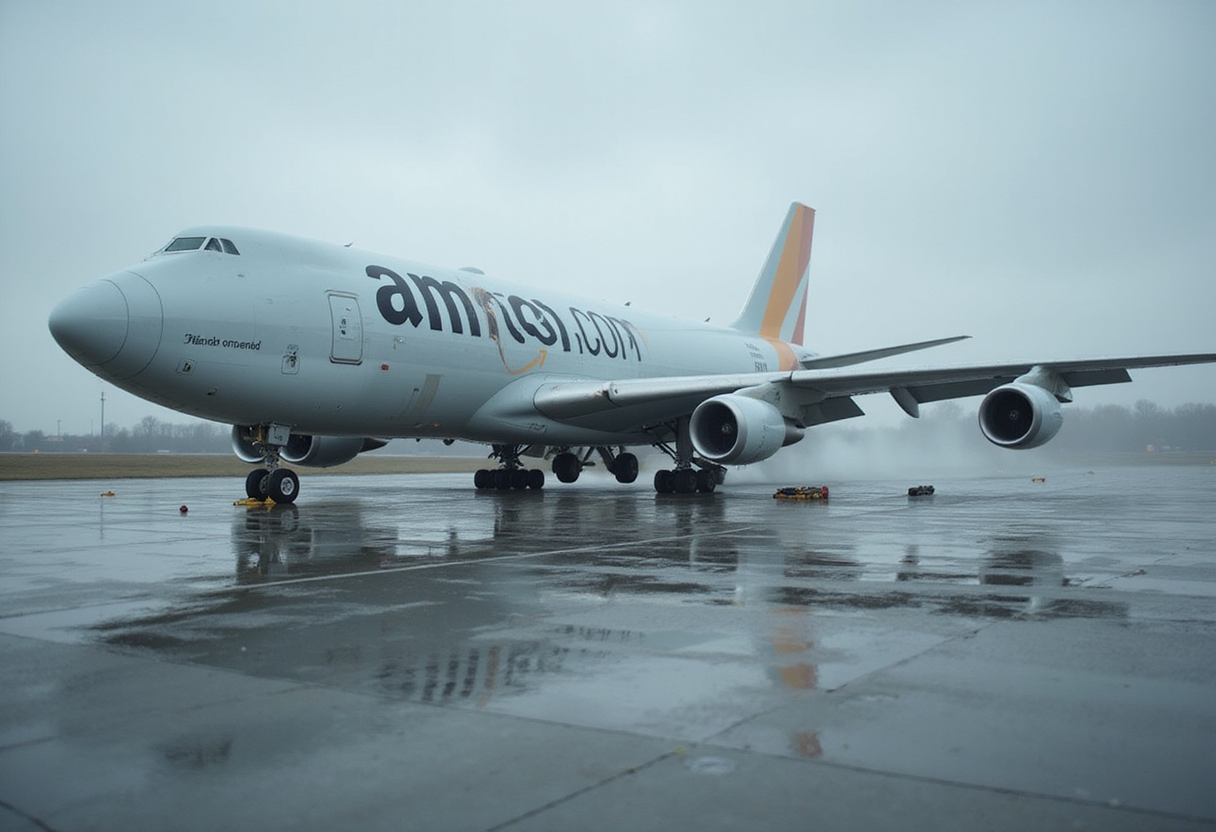
At least five people died when an Amazon cargo aircraft crashed in Miami, Time Magazine reports. The carrier, airframe and flight details remain unconfirmed as investigators begin their work.
- Desk
- Air Cargo
- By
- Elena Vasquez
- Filed
- Length
- 567 words
- Read
- 3 min
Key points03
- At least five people were killed when an Amazon cargo aircraft crashed in Miami, Time Magazine reported.
- The operating carrier, aircraft type, flight number and phase of flight have not yet been confirmed in public reporting.
- A fatal accident involving Amazon's contracted air freight network is expected to draw NTSB and FAA scrutiny as investigators work to establish the cause.
At least five people died when an Amazon cargo aircraft crashed in Miami, according to a report from Time Magazine that remains the primary confirmed account of the accident.
The aircraft was operating as part of the Amazon Air freight network at the time of the crash. Time Magazine, which broke the story for a general audience, has not yet published details on the aircraft type, the operator flying the airframe under contract, the flight number, or the specific phase of flight in which the accident occurred. The death toll of at least five represents the only firm casualty figure confirmed so far.
For the air cargo sector, the incident lands in one of the busiest freight gateways in the Americas. Miami International Airport anchors the airbridge between the United States and Latin American markets, handling a substantial share of the region's perishables, e-commerce volumes, and time-critical freight. Any extended disruption at the airport, or a grounded fleet type within the Amazon Air network, would matter for shippers moving goods through Florida and for forwarders booking capacity on Southbound lanes.
Amazon Air does not operate its own air operator certificate in the conventional sense. The e-commerce giant moves freight on aircraft flown by contracted carriers, a network that has expanded significantly as Amazon has internalized air freight capacity it once bought from integrators and combination carriers. Identifying which contract operator was flying the accident aircraft, and under what maintenance and crewing arrangements, will be central to the investigation that follows.
The investigative pathway is standard for a fatal accident on US soil. The National Transportation Safety Board leads the probe, with participation expected from the Federal Aviation Administration, the engine and airframe manufacturers, and the operating carrier. Typical lines of inquiry include weather conditions at the time of the accident, aircraft maintenance history, crew experience and duty time, and the loading of cargo aboard the freighter. No findings have been released, and none should be anticipated in the short term; NTSB preliminary reports generally follow within weeks, while probable-cause determinations can take a year or longer.
The commercial consequences for Amazon depend heavily on what the investigation finds. If the accident traces to a systemic issue — maintenance practices, cargo loading procedures, or a specific airframe problem — the implications could extend across the contracted fleet. If it proves isolated, the network impact may be limited to the lost airframe and schedule adjustments while the investigation proceeds.
Amazon has invested billions in building its own air logistics layer to guarantee capacity for its delivery promises, reducing reliance on third-party lift from carriers such as UPS and the US domestic networks of integrators. A fatal accident tests that strategy in the most visible way possible, inviting scrutiny of the contracting model under which the freight flies.
For the families of the crew, and for any victims on the ground, the immediate facts are human rather than commercial. At least five lives were lost. The freight industry's attention now turns to Miami, where investigators will begin the methodical work of establishing what happened and why.
Further details — including the carrier, the airframe, the flight's origin and destination, and the final casualty count — will sharpen the picture as official statements and reporting develop. Shippers with freight exposed to Amazon Air capacity through Miami should watch for statements on network continuity in the coming days.
Source: Google News: air cargo
More from Elena Vasquez
Show full bio
News editor covering industry trends and analytics at Waybill Wire.
144 articles
Related05
NTSB: No wind warning before Amazon cargo jet crashed in Miami
Amazon Prime Air Freighter Crashes in Miami, Killing at Least Five
Amazon suspends 21 Air flights after fatal Miami cargo crash
New report adds detail on fatal Amazon cargo aircraft crash
Amazon suspends 21 Air operations after Miami runway crash